Rockets & Launch Systems
Explore 5 fascinating articles about rockets & launch systems
Explore rocket propulsion, booster staging, and launch vehicle engineering. Learn how we escape Earth’s gravity.
All Articles (5)
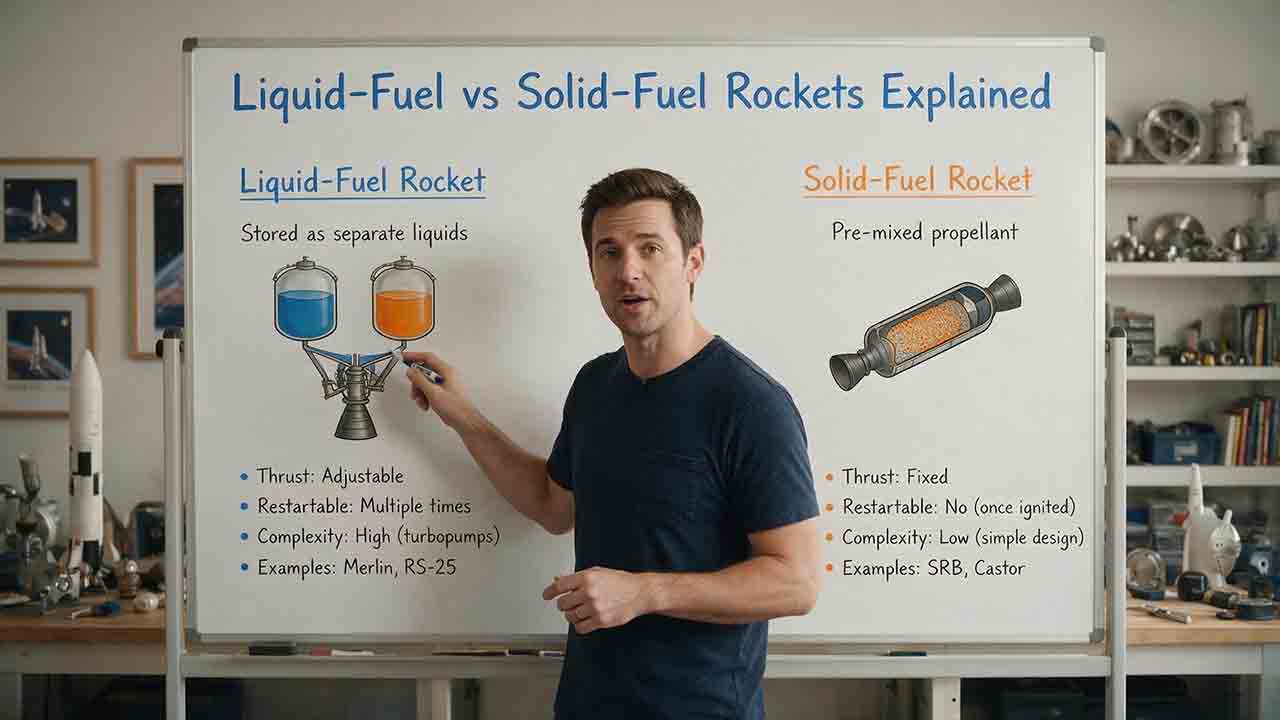
Liquid-Fuel vs Solid-Fuel Rockets Explained
Liquid-fuel and solid-fuel rockets solve different engineering problems. Liquid rocket engines store fuel and oxidizer separately, allowing many systems to regulate thrust, shut down, or restart during flight. Solid rocket motors contain prepared solid propellant and can deliver compact, powerful thrust with fewer active feed-system components, although conventional motors offer limited control after ignition. This article compares both propulsion types across thrust, specific impulse, storage, mechanical complexity, reliability, cost, reusability, and environmental considerations. It also explains why solid motors often serve as launch boosters while liquid engines are widely used for core stages, upper stages, and powered recovery. An original calculation demonstrates how specific impulse affects ideal velocity change, while a five-part mission framework helps readers evaluate propulsion choices based on control, performance, packaging, operations, and lifecycle requirements. Real launch systems, including SLS, Ariane 6, Falcon 9, and Vulcan Centaur, show why no single propulsion type is best for every mission.
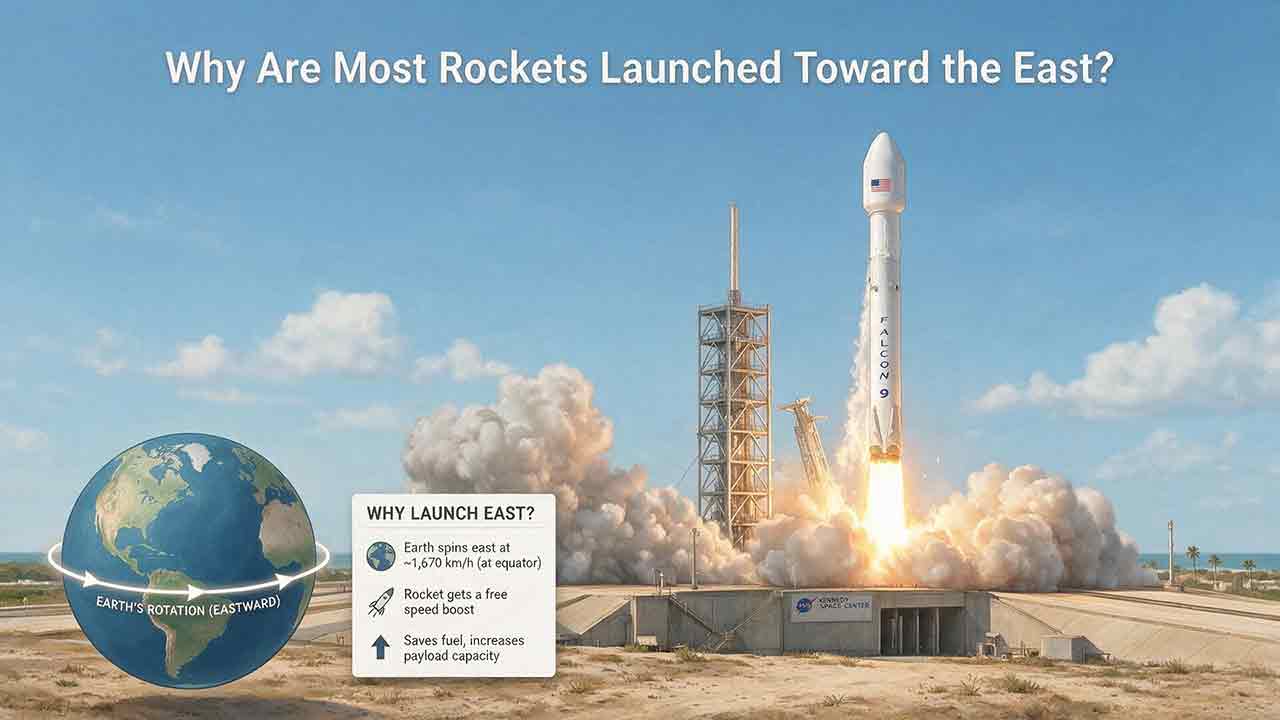
Why Are Most Rockets Launched Toward the East?
Most orbital rockets launch generally toward the east because Earth rotates from west to east, giving launch vehicles useful initial velocity before liftoff. This advantage is strongest near the equator and can reduce the additional speed a rocket must produce for compatible prograde orbits. However, launch direction is not determined by efficiency alone. Target orbital inclination, launch-site latitude, populated areas, stage-impact zones, range-safety rules, and mission objectives may require a rocket to travel northeast, southeast, south, or along a retrograde trajectory. This article explains how Earth’s rotation contributes to launch performance, compares Kourou with Cape Canaveral through a transparent calculation, and shows how latitude and launch azimuth affect the usable speed component. It also introduces the reader-friendly EAST framework for evaluating real missions and explains why polar, Sun-synchronous, and range-constrained launches often do not fly directly east.
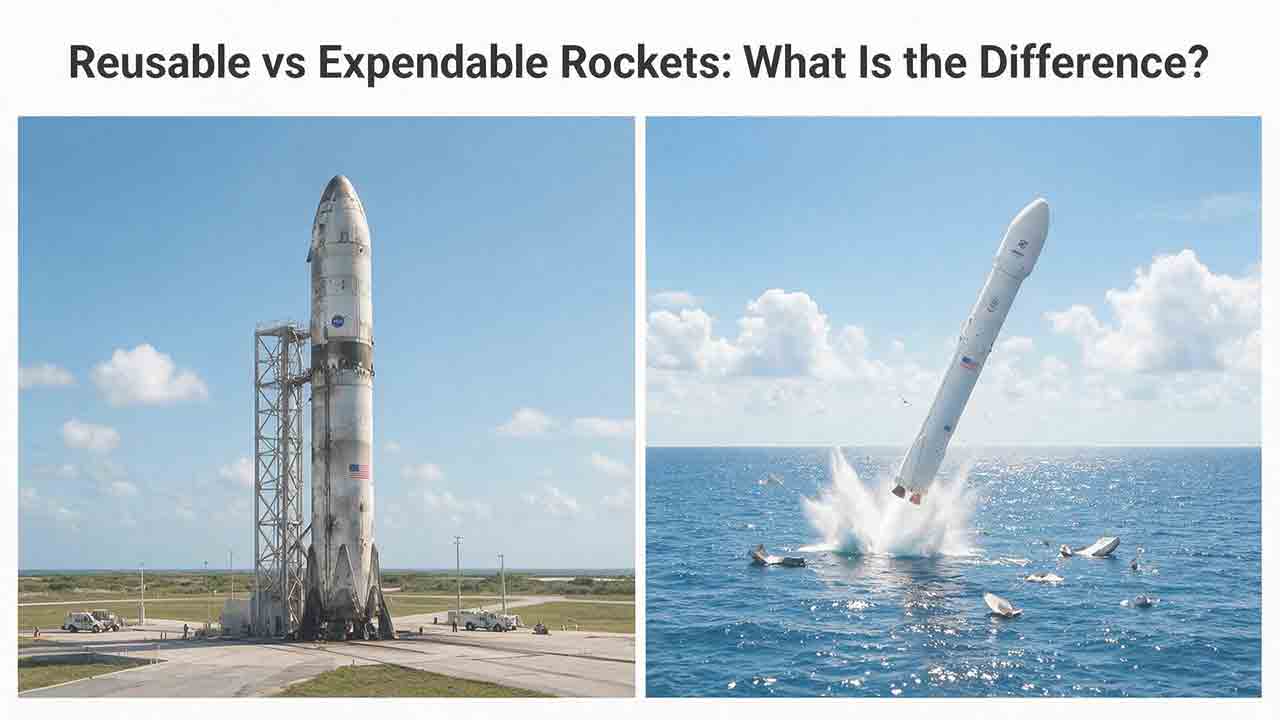
Reusable vs Expendable Rockets: What Is the Difference?
Reusable and expendable rockets follow two different approaches to launch vehicle design. Reusable systems recover and fly again one or more major components, while expendable rockets use each propulsive stage only once. This guide compares the two architectures across payload performance, recovery requirements, launch cadence, reliability, refurbishment, and mission cost. It explains why reusable rockets may reduce average hardware costs when stages fly frequently, while expendable configurations can preserve more performance for demanding payloads or high-energy destinations. The article also distinguishes partial reuse from full reuse, examines Falcon 9, NASA’s Space Launch System, and ESA’s Themis demonstrator, and introduces the original RAMP framework for early mission screening. A fictional cost-sensitivity example, decision tree, troubleshooting table, and practical checklist help readers evaluate launch options without relying on unsupported commercial cost claims or treating either architecture as universally superior.
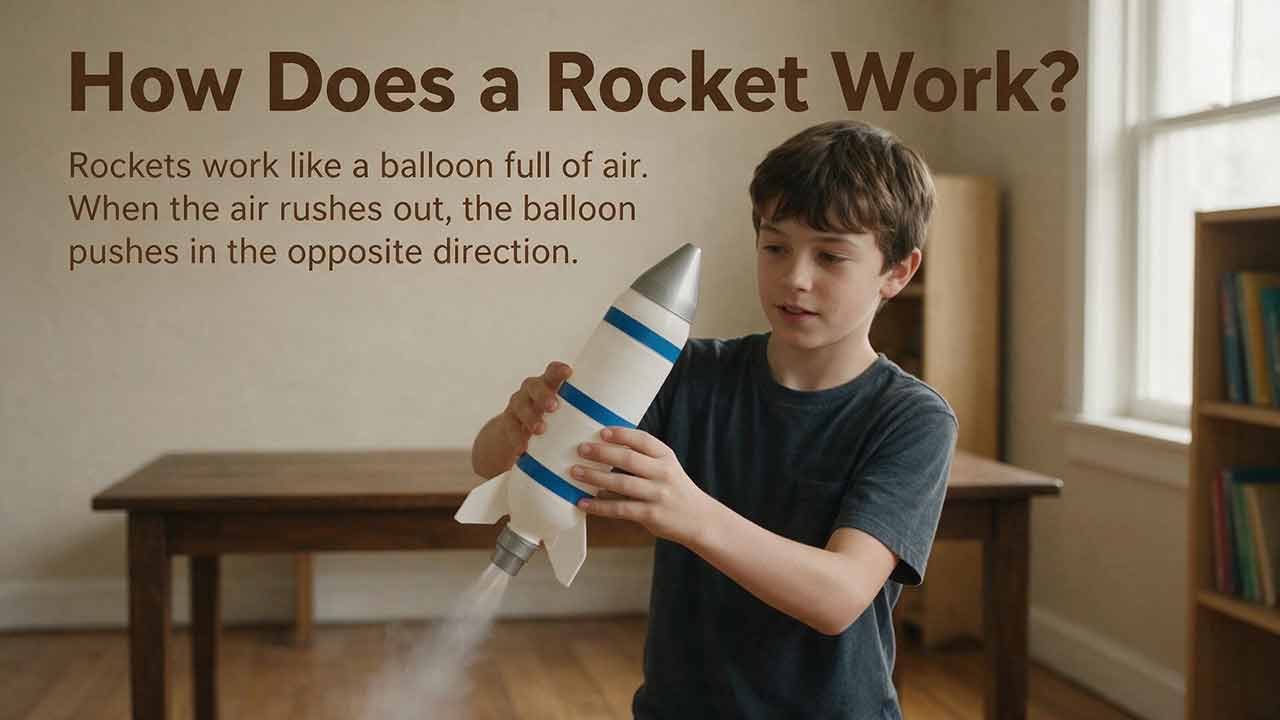
How Does a Rocket Work?
A rocket works by carrying propellant and accelerating exhaust backward at high speed, producing forward thrust through conservation of momentum. This article explains the complete process from engine ignition and liftoff to guidance, staging, orbit insertion, and payload separation. It shows why rockets carry both fuel and an oxidizer, how a nozzle converts pressure into exhaust velocity, why rocket engines can operate in a vacuum, and why reaching orbit requires substantial horizontal speed rather than altitude alone. Readers will also find transparent examples for calculating thrust-to-weight ratio and ideal delta-v, along with comparisons of liquid, solid, and hybrid propulsion systems. Practical tables explain Max Q, launch phases, steering methods, payload fairings, mission tradeoffs, and common launch-broadcast terminology. Based on authoritative NASA and European Space Agency references, the guide clearly separates established physics, simplified estimates, and original explanatory frameworks while avoiding construction, ignition, propellant, or operational launch instructions.
Why Do Rockets Use Multiple Stages?
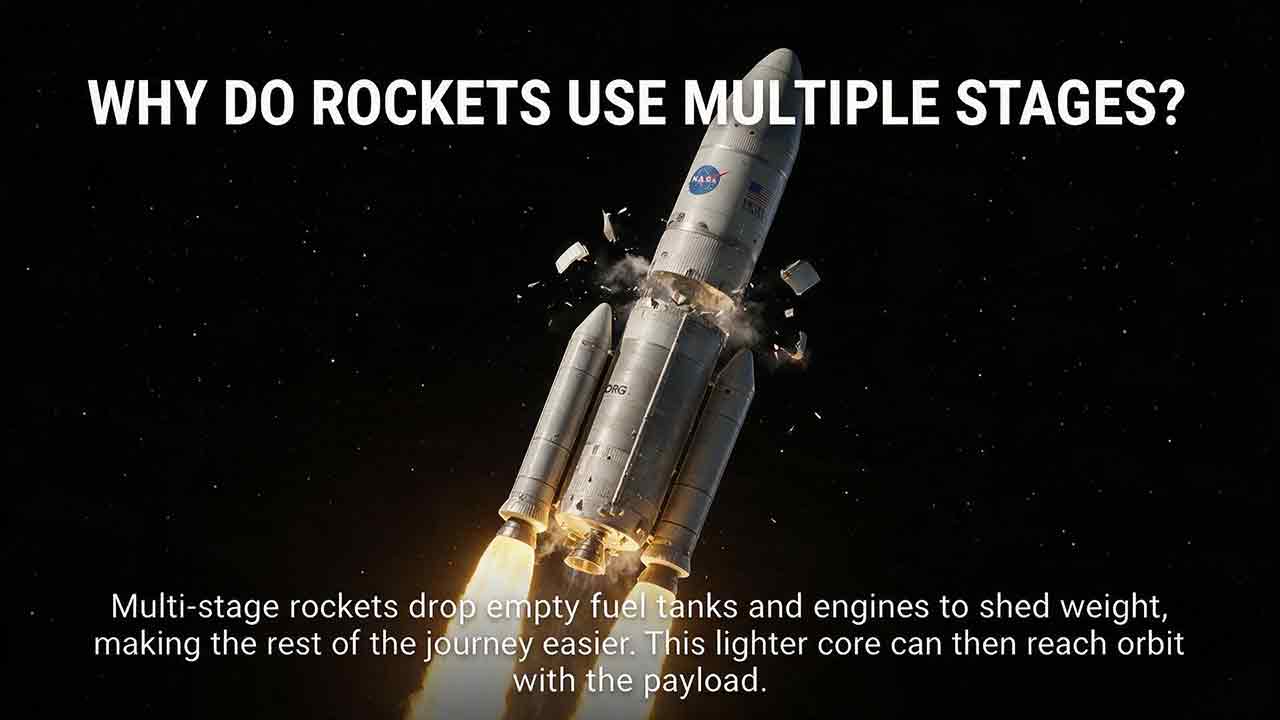
Rockets use multiple stages to discard engines, tanks, and structural hardware after those components have completed their work. Removing this unused mass allows the remaining stages to accelerate the payload more efficiently and helps each engine operate in the environment for which it was designed. This guide explains rocket staging step by step, including stage separation, upper-stage ignition, the ideal rocket equation, and the trade-offs engineers consider when choosing boosters, two-stage systems, or three-stage vehicles. An original educational calculation compares single-stage and two-stage configurations with the same starting mass, payload, and engine efficiency, showing how staging can increase ideal delta-v. Real examples from Saturn V, Falcon 9, Ariane 6, and NASA’s Space Launch System demonstrate how different launch vehicles divide the work of reaching orbit. The article also includes common misconceptions, a launch-timeline checklist, and a practical framework for understanding any rocket’s staging architecture.