Spacecraft Engineering
Explore 5 fascinating articles about spacecraft engineering
Deconstruct satellite payloads, thermal controls, and power systems. Explore the engineering behind hardware built for space.
All Articles (5)
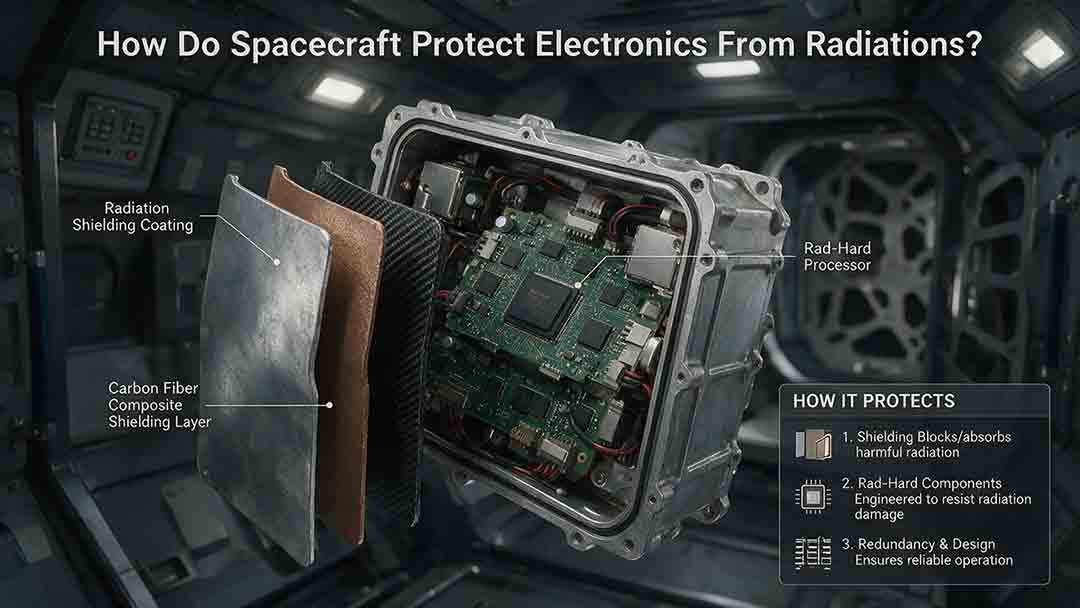
How Do Spacecraft Protect Electronics From Radiation?
Spacecraft protect electronics from radiation through a layered engineering strategy rather than a single protective material. This article explains how total ionizing dose, displacement damage, single-event effects, and spacecraft charging can disrupt computers, memory, sensors, and power systems. It examines the roles of radiation-hardened components, physical shielding, error-correcting memory, current limiting, watchdog timers, redundancy, fault isolation, and safe-mode recovery. Readers will also learn how engineers model mission-specific radiation environments, evaluate the quality of component test evidence, estimate dose margin, and choose different protection strategies for Earth orbit, deep space, and high-radiation destinations such as Jupiter. Practical comparison tables, a decision framework, real mission examples, a troubleshooting guide, and a design-review checklist show why reliable spacecraft must be able to prevent, detect, contain, and recover from radiation-related faults.
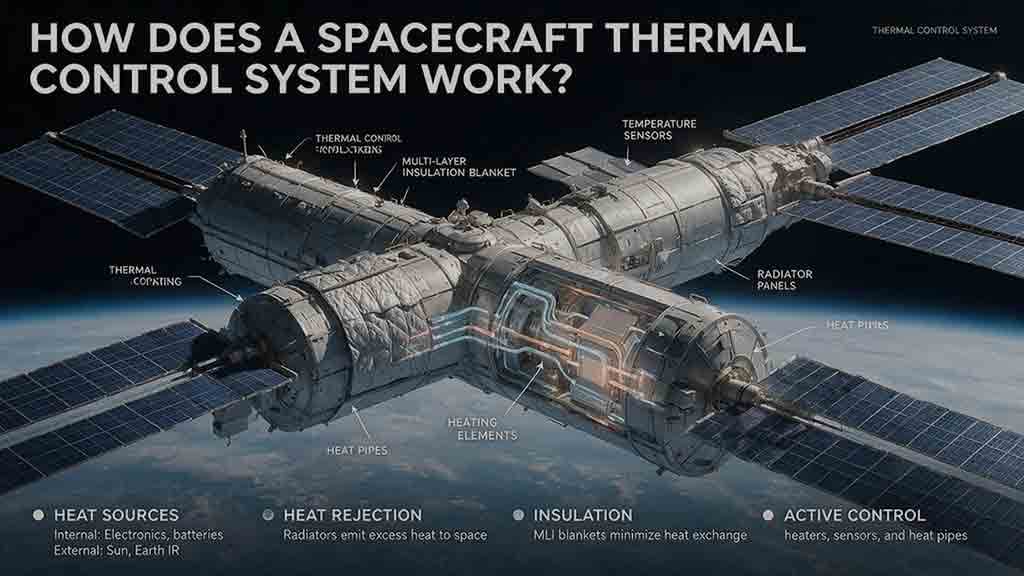
How Does a Spacecraft Thermal Control System Work?
A spacecraft thermal control system keeps onboard equipment within safe operating and survival temperatures by controlling how heat is absorbed, generated, transported, stored, and released. This guide explains how passive technologies—including multilayer insulation, thermal coatings, heat pipes, straps, and radiators—work alongside active systems such as heaters, temperature sensors, cryocoolers, and pumped fluid loops. It introduces the original Protect–Move–Reject–Trim–Verify framework for understanding complete spacecraft heat paths and provides practical tools for evaluating thermal designs. Readers will also find a worked radiator-sizing example, a thermal-resistance calculation, mission-specific selection guidance, common design mistakes, troubleshooting methods, and real examples from the James Webb Space Telescope, International Space Station, and Europa Clipper. Based on publicly available NASA and ESA documentation, the article distinguishes simplified educational calculations from actual flight-design analysis while showing why spacecraft must be protected from both overheating and excessive cooling.
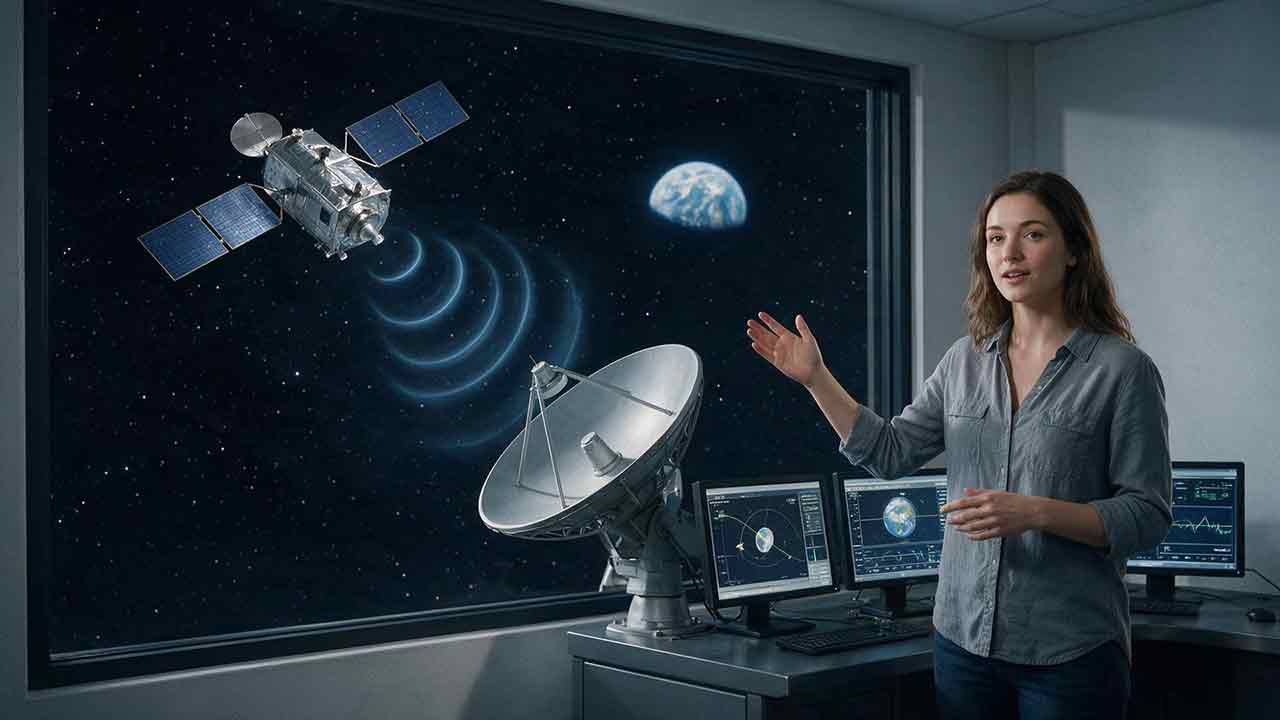
How Do Spacecraft Communicate With Earth?
Spacecraft communicate with Earth by sending encoded information through radio waves or laser light. This guide explains the complete path from an onboard instrument and computer to a transmitter, antenna, ground station, and mission-control center. It covers uplinks, downlinks, telemetry, tracking, direct-to-Earth communication, relay satellites, spacecraft crosslinks, and onboard data storage. Readers will also learn why signals weaken over distance, how communication delays are calculated, and how antenna gain, transmitter power, data rate, coding, pointing accuracy, and ground-network availability affect link reliability. Worked examples show how long a signal may take to travel between Mars and Earth and how much data can be returned during a scheduled contact. Real mission examples—including NASA’s Deep Space Network, the Mars Relay Network, the James Webb Space Telescope, and the DSOC optical demonstration—show how these engineering principles are applied in practice.
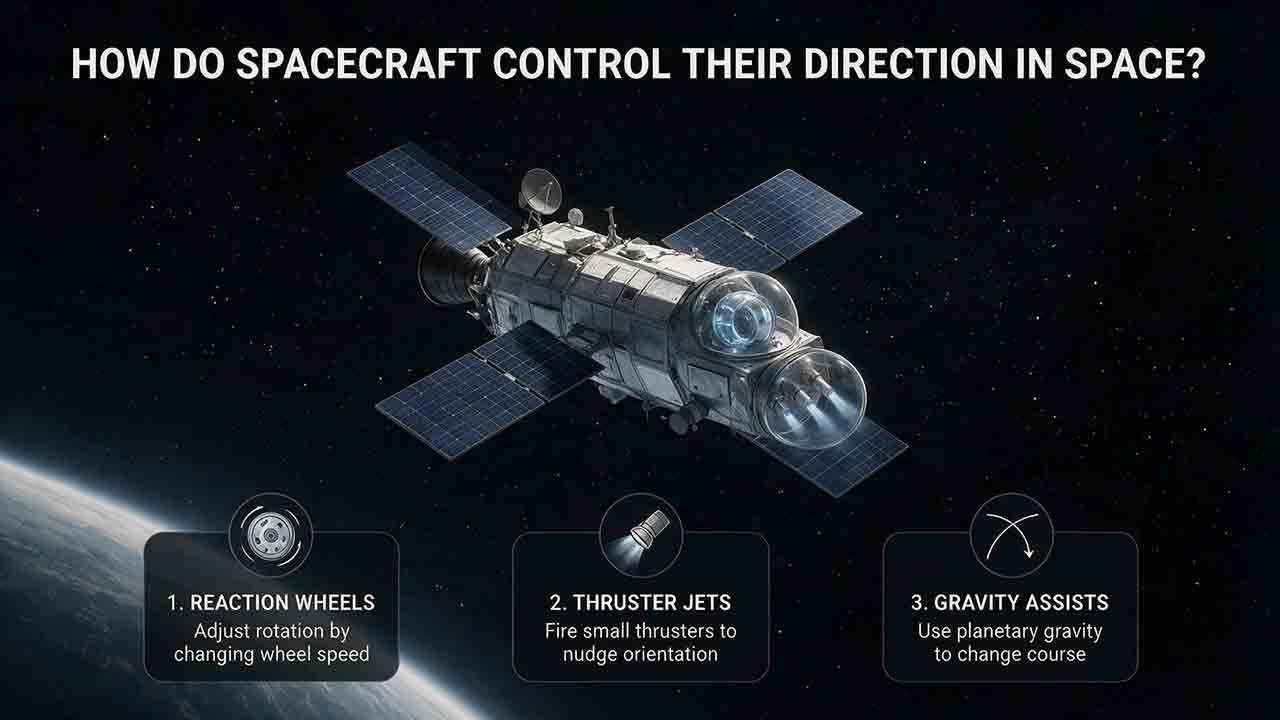
How Do Spacecraft Control Their Direction in Space?
Spacecraft control their direction through a coordinated attitude determination and control system. Sensors such as star trackers, Sun sensors, magnetometers, and gyroscopes estimate the spacecraft’s orientation, while onboard software compares that estimate with the required pointing direction. Reaction wheels, thrusters, control moment gyroscopes, and magnetic torquers then apply the necessary control torque. Some missions also use spin stabilization to resist unwanted changes in orientation. This article explains the difference between attitude and trajectory, follows the Sense → Estimate → Compare → Act → Verify control loop, and compares the strengths and limitations of major control methods. It also includes simplified torque and momentum calculations, real spacecraft examples from NASA and ESA missions, troubleshooting scenarios, and a practical framework for evaluating attitude-control architectures. Readers will learn why spacecraft pointing depends on an integrated system rather than a single steering device.
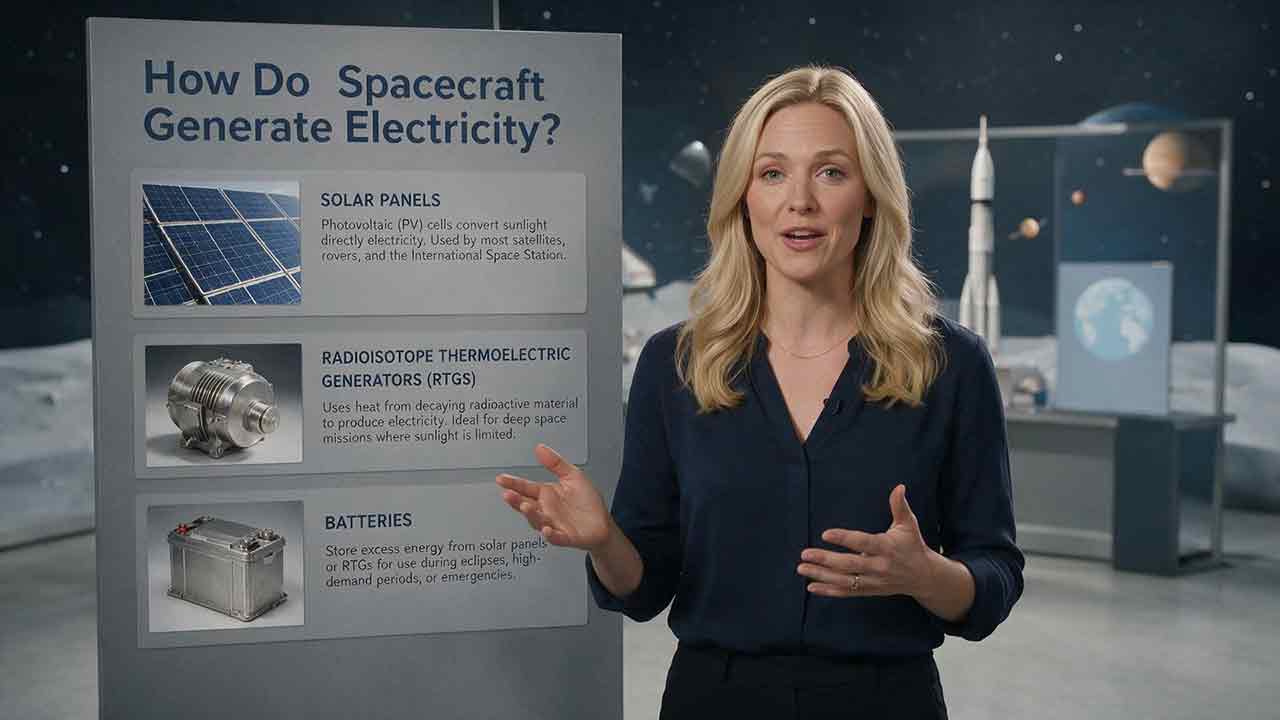
How Do Spacecraft Generate Electricity?
Spacecraft generate electricity through carefully designed power systems matched to their destination, operating environment, mission duration, and electrical demand. Most satellites and many planetary spacecraft use photovoltaic solar arrays, supported by rechargeable batteries during eclipses, high-demand operations, and emergencies. Missions with weak or unreliable sunlight may instead use radioisotope power systems, while fuel cells, primary batteries, and fission systems serve more specialized roles. This guide explains how spacecraft convert energy into electricity, regulate voltage, store energy, distribute power to onboard equipment, and reject waste heat. It also compares major power sources, distinguishes watts from watt-hours, and explains why batteries are not always the primary generator. Transparent solar-array and eclipse-battery calculations demonstrate basic sizing principles, while the original SCOPE framework helps readers compare sunlight availability, continuity needs, output profiles, program constraints, and end-of-life conditions. Real mission examples include Hubble, Juno, Europa Clipper, Apollo, Curiosity, and Perseverance.