Human Spaceflight
Explore 5 fascinating articles about human spaceflight
Follow humanity’s journey beyond Earth. Learn about astronaut training, life support systems, and space stations.
All Articles (5)
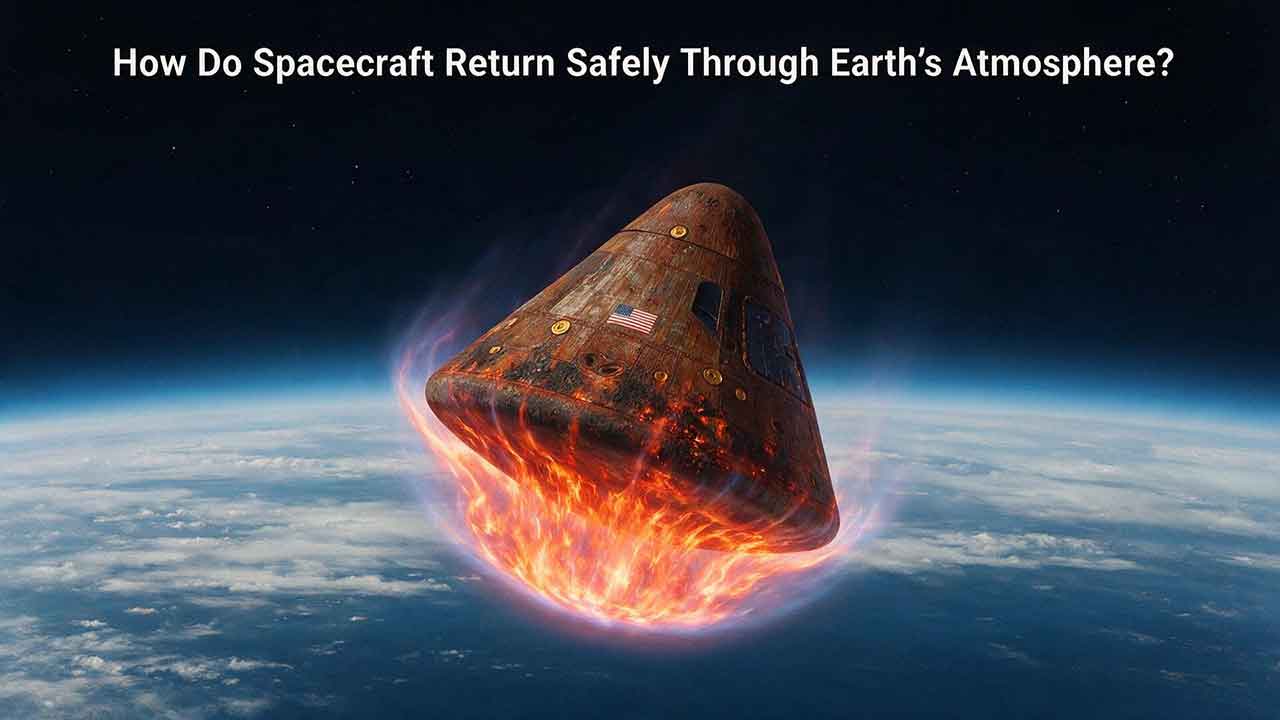
How Do Spacecraft Return Safely Through Earth’s Atmosphere?
Spacecraft return safely through Earth’s atmosphere by managing an enormous amount of energy through a carefully coordinated sequence of trajectory control, thermal protection, aerodynamic deceleration, landing, and recovery. This article explains how deorbit burns and entry corridors guide a spacecraft toward its landing region, why blunt heat shields reduce the danger of hypersonic heating, and how guidance systems control attitude, range, and structural loads. It includes an original comparison of low-Earth-orbit and lunar-return energy, a practical review of ablative and reusable heat-shield technologies, and the CosmoBasics Four-Layer Reentry Framework covering path, protection, control, descent, and recovery. Real-world lessons from Artemis I and the crewed Artemis II mission show why postflight inspection remains essential even after a successful splashdown. Readers will also learn how parachutes, wings, landing rockets, flotation systems, and recovery teams complete the return safely.
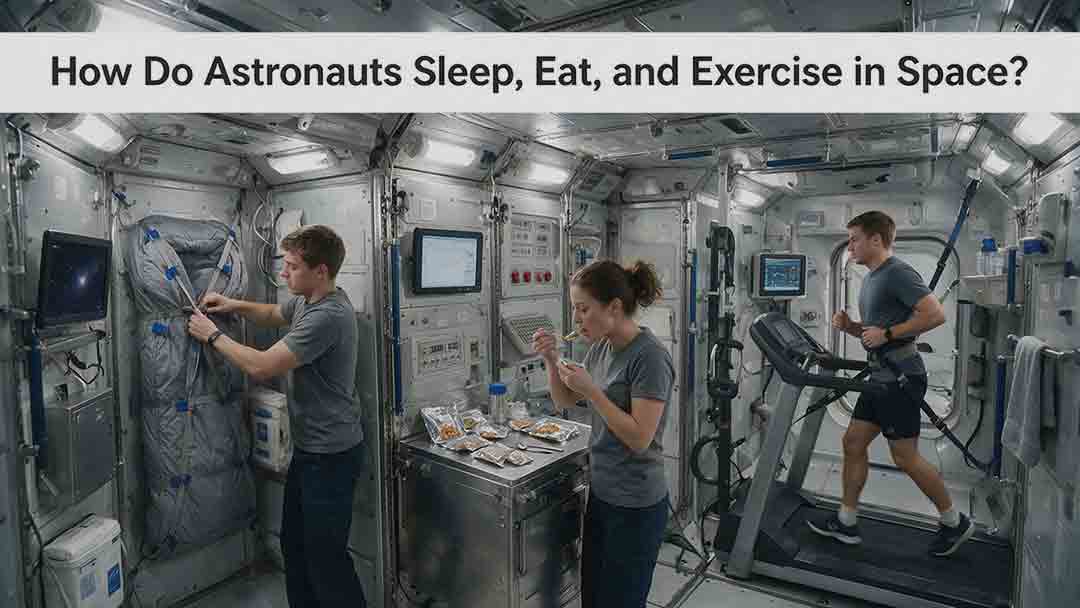
How Do Astronauts Sleep, Eat, and Exercise in Space?
Astronauts must redesign ordinary routines when they live in microgravity. This article explains how crew members sleep in secured bags inside ventilated quarters, prepare packaged meals without letting food or liquids drift through the cabin, and use specialized exercise equipment to protect their physical condition. It examines the roles of the Advanced Resistive Exercise Device, the T2 treadmill, and the CEVIS cycle ergometer, while clarifying the difference between active workout time and the full scheduled exercise period. Readers will also learn why tortillas are practical in space, how airflow affects sleep, why ordinary weights do not work normally in orbit, and how nutrition, rest, and exercise support one another. NASA and ESA sources provide the factual foundation, while original comparison tables and practical evaluation frameworks show how spacecraft systems replace functions normally supplied by gravity. The article also distinguishes current International Space Station practices from possible future Moon and Mars mission requirements.
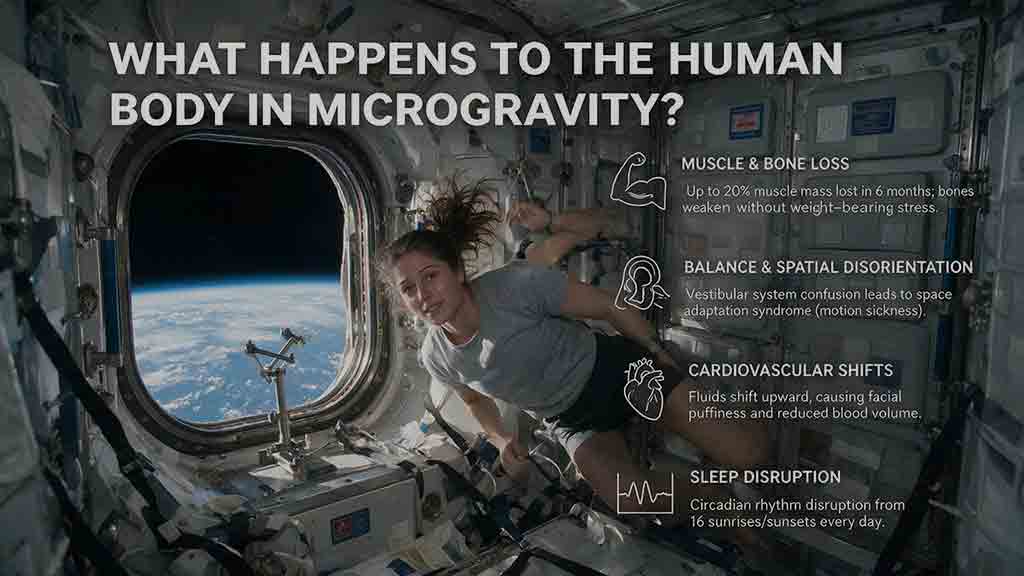
What Happens to the Human Body in Microgravity?
Microgravity changes the human body because fluids are no longer pulled toward the legs, muscles and bones receive less mechanical loading, and the brain loses gravity as a dependable orientation signal. This article explains how weightlessness affects balance, circulation, muscle strength, bone density, vision, blood, immunity, digestion, sleep, and spinal length. It also examines why astronauts may struggle to stand or walk after landing and how exercise, nutrition, monitoring, and rehabilitation help reduce these risks. Two original tools—the Load–Flow–Orientation Framework and the Gravity-Transition Readiness Matrix—connect physiological changes with real mission demands. Drawing on NASA standards, NASA technical reports, ESA materials, and peer-reviewed human spaceflight research, the guide clearly separates established observations from experimental countermeasures and unresolved questions. It also explains what these effects could mean for future missions to the Moon and Mars without treating population averages as predictions for individual astronauts.
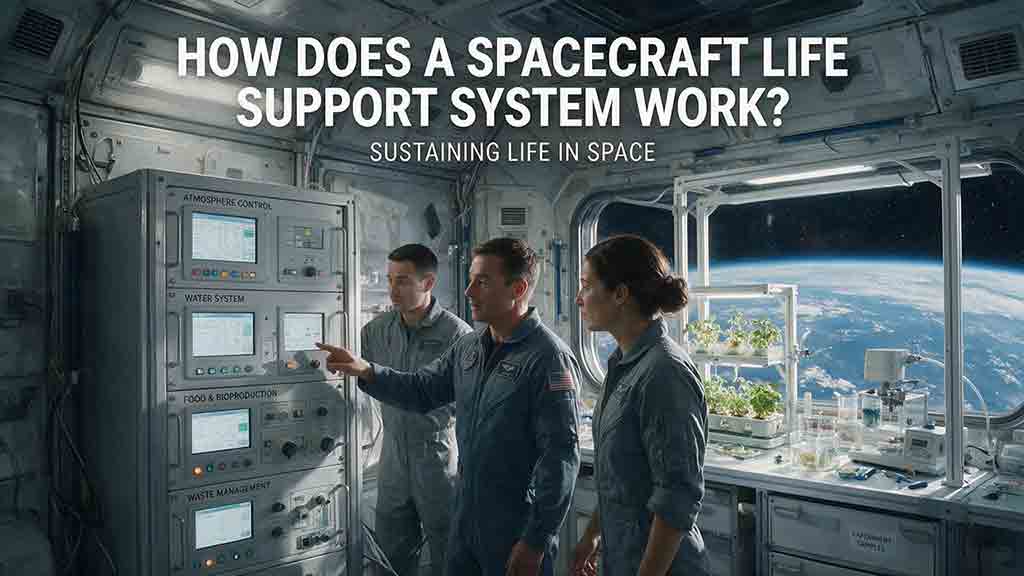
How Does a Spacecraft Life Support System Work?
A spacecraft life support system creates and maintains a safe cabin environment for astronauts by managing oxygen, carbon dioxide, air pressure, ventilation, temperature, humidity, water, waste, and environmental hazards. This article explains how the Environmental Control and Life Support System connects these functions into continuous air, water, heat, and waste-management loops. It compares stored-resource and regenerative designs, examines how the International Space Station and Orion use different life support architectures, and clarifies what NASA’s reported 98% water-recovery milestone actually means. Readers will also find an educational water-use calculation, a high-level architecture checklist, a system-failure comparison table, and the original Four-C framework for evaluating Crew, Calendar, Cargo, and Consequences. The guide relies on NASA and European Space Agency sources while clearly separating official facts, illustrative estimates, and independent editorial analysis.
How Do Astronauts Breathe in Space?
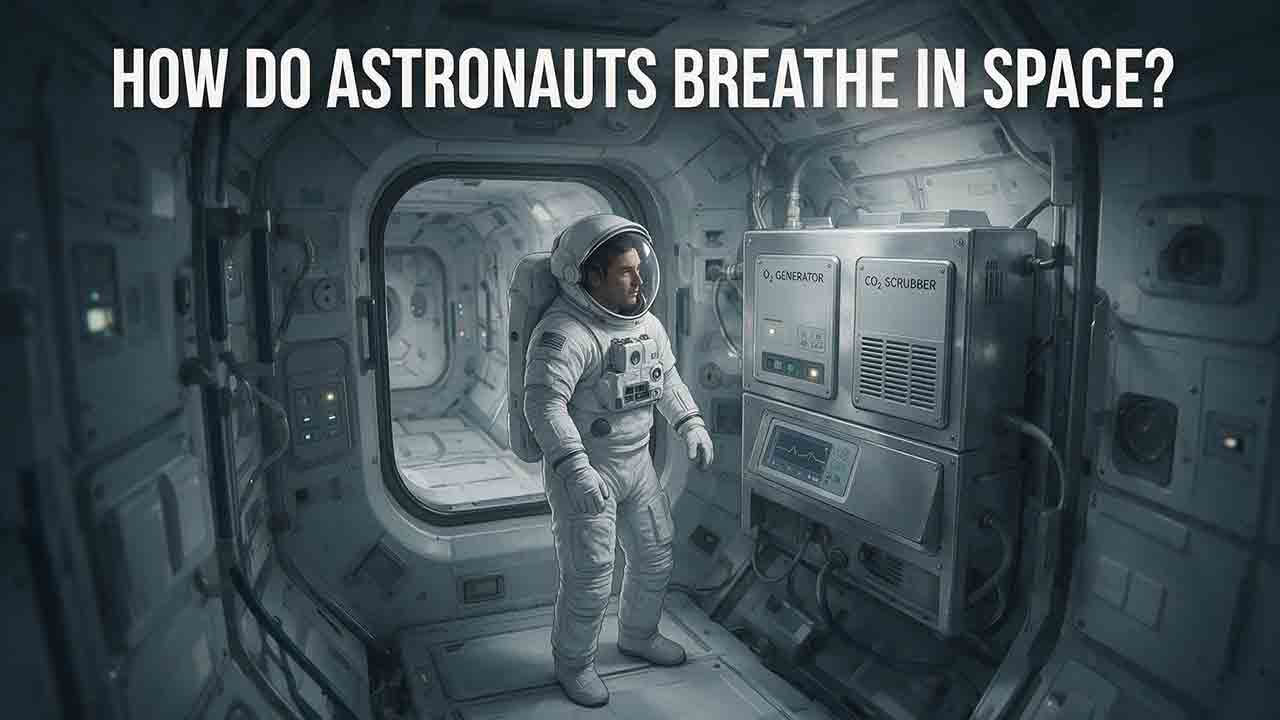
Astronauts breathe in space by living and working inside sealed, pressurized environments supported by carefully managed life-support systems. This article explains how spacecraft maintain breathable air by replacing consumed oxygen, circulating cabin gas, removing carbon dioxide, controlling humidity, filtering contaminants, and monitoring pressure. It also explores how the International Space Station produces oxygen through water electrolysis and recovers part of the oxygen contained in exhaled carbon dioxide through the Sabatier process. A worked example estimates the oxygen needs of a four-person crew over 30 days, while original Pressure–Oxygen–Circulation–Cleanup and Inventory–Rate–Recovery frameworks help readers understand system design and failure scenarios. The guide also compares spacecraft cabins with spacesuits, explains why fans are essential in microgravity, examines water-recovery limits, and discusses how future Moon and Mars missions may rely on more regenerative life-support technologies.