What Happens to the Human Body in Microgravity?

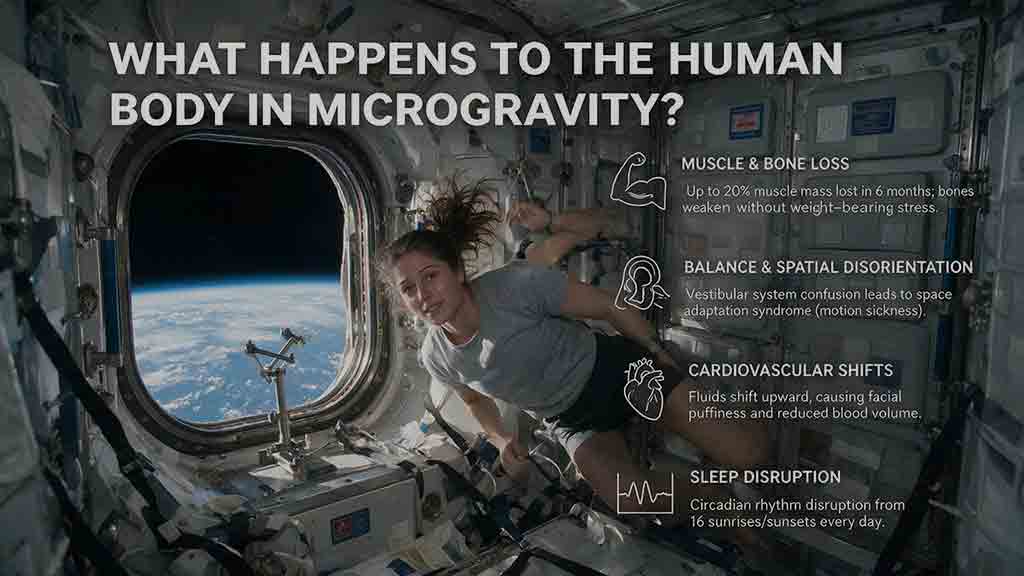
What Happens to the Human Body in Microgravity?
Human Spaceflight
Microgravity changes the human body because muscles no longer support normal body weight, bones receive less mechanical loading, fluids shift toward the chest and head, and the brain loses gravity as a dependable orientation signal. Over time, astronauts may experience motion sickness, reduced strength, bone loss, cardiovascular deconditioning, vision-related changes, altered blood and immune responses, and difficulty readjusting after landing.
Key Takeaways
- Fluid redistribution and sensory disorientation can begin within minutes or hours of entering microgravity.
- Muscles, bones, circulation, balance, vision, and physical performance receive the closest operational attention during long missions.
- Many changes are useful adaptations to weightlessness, but those same adaptations can become disadvantages when gravity returns.
- Exercise, nutrition, medical monitoring, sleep management, and rehabilitation reduce risk without fully recreating Earth’s gravitational environment.
- The importance of a body change depends partly on what the astronaut must do after the next gravity transition.
This guide explains how microgravity affects the human body, how quickly the changes can develop, which effects are directly linked to reduced gravity, and which arise from the wider spaceflight environment. It also provides two original tools for organizing the evidence: the Load–Flow–Orientation Framework and the Gravity-Transition Readiness Matrix.
Scope note: This article provides general educational information. It is not medical advice, an individual risk assessment, or a substitute for aerospace-medicine standards, clinical evaluation, or flight-surgeon guidance.
What Does Microgravity Actually Mean?
Microgravity is the condition experienced when a spacecraft, its crew, and the objects inside are falling together. Because they accelerate along the same orbital path, the occupants experience very little apparent weight.
Astronauts in low Earth orbit have not escaped Earth’s gravity. Gravity continually bends the spacecraft’s path around Earth, creating an orbit rather than allowing the vehicle to travel away in a straight line.
The familiar phrase “zero gravity” is therefore not completely accurate. Small accelerations remain because of spacecraft maneuvers, atmospheric drag, machinery, crew movement, vibrations, and slight differences in gravitational force across the vehicle.
Human physiology reacts strongly because life on Earth developed under continuous gravitational loading. Gravity influences how blood is distributed, how muscles maintain posture, how bones preserve their structure, and how the nervous system identifies direction.
What Happens to the Body in Microgravity at a Glance?
The body does not respond as one unit. Different systems change for different physical reasons and on different timelines.
| Body system | Main change | Typical concern | Main evidence |
|---|---|---|---|
| Body fluids | Fluid moves from the legs toward the chest and head | Congestion and difficulty regulating circulation after landing | Human flight observations |
| Balance system | Gravity no longer provides a stable directional reference | Motion sickness and impaired coordination | Human flight testing |
| Muscles | Postural and lower-body muscles receive less routine loading | Reduced strength, power, and endurance | Human performance measurements |
| Bones | Weight-bearing regions receive weaker mechanical stimulation | Loss of skeletal reserve and increased calcium release | Bone scans and metabolic markers |
| Heart and circulation | Blood volume and pressure-control responses adapt | Lower aerobic capacity and orthostatic intolerance | Cardiovascular testing |
| Eyes | Some astronauts develop findings grouped as SANS | Vision changes and uncertain long-term implications | Eye examinations and imaging |
| Blood | Plasma volume and red-blood-cell regulation change | Reduced reserve during gravity transitions | Human spaceflight studies |
| Immune system | Immune regulation changes under several spaceflight stressors | Infection, inflammation, allergy, or viral reactivation | Biomarker studies |
| Spine | Reduced compression allows temporary elongation | Back discomfort and changed seated dimensions | Human measurements |
| Sleep | Schedules, lighting, noise, and workload disrupt rest | Fatigue and reduced cognitive performance | Operational research |
The exact timing and severity vary. Mission length matters, but exercise response, nutrition, anatomy, health status, workload, previous flight experience, and individual biology also affect the outcome.
How Do the Effects Develop During a Mission?
Microgravity adaptation is a sequence rather than a single event.
| Mission phase | Common changes | Main operational concern |
|---|---|---|
| First hours | Headward fluid shift and unfamiliar movement sensations | Orientation, nausea, and coordination |
| First days | Space motion sickness and blood-volume adjustment | Safe completion of scheduled tasks |
| Following weeks | Muscle unloading and cardiovascular deconditioning | Strength, endurance, and exercise response |
| Following months | Musculoskeletal changes and possible ocular findings | Long-term health and landing readiness |
| Landing | Gravity again loads the circulation, balance system, muscles, and bones | Standing, walking, and vehicle exit |
| Recovery | Body systems readapt at different rates | Individual rehabilitation and follow-up |
The return to gravity is not simply the end of the process. It is another major physiological transition that can temporarily expose weaknesses hidden while the astronaut was floating.
Why Does Microgravity Affect So Many Body Systems?
The major changes can be organized with the Load–Flow–Orientation Framework.
This is an editorial teaching framework created for this article. It is not an official NASA medical classification, diagnostic system, or clinically validated score.
Load: The Body No Longer Supports Its Normal Weight
On Earth, the legs, hips, spine, and postural muscles work throughout the day. Standing, walking, climbing stairs, carrying objects, and remaining upright all load the musculoskeletal system.
Floating removes much of that routine demand. Muscles that no longer resist body weight are used less, while weight-bearing bones receive weaker signals to maintain their existing structure.
Flow: Fluids Are No Longer Pulled Toward the Feet
An upright person on Earth has a head-to-foot pressure gradient. Gravity helps retain more blood and tissue fluid in the lower body than would be present while floating.
In microgravity, much of that gradient disappears. Blood and other fluids move toward the chest, neck, and head, changing circulation and the pressures experienced by upper-body tissues.
Orientation: The Brain Loses Its Familiar Down Direction
The vestibular organs of the inner ear normally interpret movement in relation to gravity. In microgravity, gravity no longer supplies the same stable reference.
Signals from the eyes, inner ear, skin, muscles, and joints may initially disagree. The nervous system must learn a new way to interpret movement and body position.
These mechanisms interact. Vision-related findings, for example, may involve fluid movement, vascular behavior, anatomy, genetics, nutrition, and mission duration rather than one isolated cause.
How Does Microgravity Redistribute Body Fluids?
One of the earliest changes is a movement of blood and tissue fluid away from the legs and toward the upper body.
Astronauts may notice:
- A fuller-looking face
- Thinner-looking legs
- Nasal congestion
- A sensation of pressure in the head
- Headache during early adaptation
- Changes in thirst or urination
On Earth, gravity helps retain fluid in the lower body while a person is upright. When that force is greatly reduced, the body initially senses a larger-than-usual fluid volume near the heart and upper torso.
Hormonal and kidney responses subsequently reduce circulating fluid volume. This adaptation is useful in orbit because the body no longer needs the same volume to maintain blood flow against Earth’s gravity.
The difficulty becomes apparent after landing. Gravity again pulls blood toward the legs, but the astronaut may have less circulating fluid and pressure-control responses adapted to weightlessness.
NASA discusses these changes in Cardiovascular Health in Microgravity.
Why Do Astronauts Get Space Motion Sickness?
Space motion sickness occurs when the nervous system receives sensory information that no longer matches the patterns learned on Earth.
The eyes may show that the astronaut is rotating, while the inner ear no longer provides a familiar gravity-based down direction. Movements that felt ordinary on Earth can temporarily produce nausea or disorientation.
Possible symptoms include:
- Nausea
- Dizziness
- Headache
- Reduced appetite
- Sweating
- Fatigue
- Difficulty concentrating
- Discomfort during rapid head movement
These symptoms reflect a genuine sensory conflict. They are not simply a reaction to anxiety or inexperience.
The brain usually adapts as the mission continues. After landing, it must reverse part of that adaptation and begin treating gravity as a dominant reference again.
Sensorimotor impairment matters because it can affect manual control, emergency procedures, vehicle exit, walking on uneven ground, and movement in a spacesuit. NASA describes the issue in Risk of Altered Sensorimotor and Vestibular Function.
How Does Microgravity Affect Muscles?
Muscles lose capacity when they no longer perform their normal work against gravity.
The largest changes generally occur in the lower body and trunk, especially in muscles used for standing, walking, maintaining posture, and stabilizing the spine.
Possible changes include:
- Reduced muscle size
- Lower maximum strength
- Reduced power
- Lower endurance
- Changes in muscle-fiber behavior
- Less precise control under load
- Greater fatigue after landing
Muscle size and usable performance are not identical. A muscle can retain much of its visible volume while still losing power, endurance, or neuromuscular control.
From the body’s perspective, this is an energy-saving adaptation. Maintaining tissue that appears unnecessary in the current environment consumes resources.
For an astronaut, however, reduced capacity can affect emergency repairs, equipment handling, spacewalks, landing tolerance, and independent vehicle exit.
Resistance and aerobic exercise are therefore part of health maintenance on long-duration International Space Station missions. NASA explains these countermeasures in Counteracting Bone and Muscle Loss in Microgravity.
Why Do Bones Weaken in Microgravity?
Bone is living tissue that continually responds to physical demand. When mechanical loading decreases, the balance between bone formation and bone breakdown changes.
The effect is not uniform throughout the skeleton. Regions that normally carry substantial weight—such as the hips, pelvis, legs, and lower spine—are generally more affected than areas that receive little weight-bearing load on Earth.
NASA summarizes skeletal unloading, monitoring, bone-density outcomes, and countermeasures in Risk of Spaceflight-Induced Bone Changes.
What Does “1%–2% Per Month” Mean?
ESA states that bone remodeling or bone loss during spaceflight can occur at approximately 1%–2% per month and that weight-bearing bones are particularly affected. This is a general summary of reported spaceflight changes, not a fixed prediction for every astronaut or every skeletal site.
The figure should not be interpreted to mean that:
- Every bone loses the same percentage.
- Every astronaut follows the same pattern.
- Loss remains perfectly linear throughout a mission.
- A six-month mission guarantees a particular result.
- Bone density and fracture strength are identical measurements.
Exercise, nutrition, skeletal site, anatomy, mission duration, measurement method, and individual response all affect the result.
ESA discusses the issue in Musculo-skeletal System: Bone and Muscle Loss.
Why Bone Change Matters Beyond the Skeleton
Bone breakdown releases calcium into the circulation. Some of that calcium is later excreted in urine, which can contribute to conditions that favor kidney-stone formation.
Skeletal reserve also becomes important when gravity returns. The astronaut must again tolerate body weight, landing forces, exercise, walking, and potentially emergency work.
Bone changes may produce no obvious symptom during flight. This makes imaging, biochemical monitoring, exercise records, and postflight follow-up more informative than symptoms alone.
What Happens to the Heart and Circulation?
The cardiovascular system adapts to an environment where it no longer needs to move blood against the same head-to-foot gravitational gradient.
During early flight, headward fluid movement changes how much blood reaches the heart. The body subsequently reduces plasma volume and adjusts blood-vessel behavior and pressure-control reflexes.
Over time, astronauts may experience:
- Reduced aerobic capacity
- Changes in cardiac filling
- Lower circulating blood volume
- Altered vascular responses
- Reduced tolerance for upright posture
- Difficulty maintaining blood pressure after landing
Why Can Standing Be Difficult After Landing?
When a person stands on Earth, gravity pulls blood toward the lower body. Blood vessels tighten, the heart adjusts, and reflexes preserve blood flow to the brain.
After prolonged microgravity exposure, those responses may temporarily be less effective. The astronaut may experience light-headedness, weakness, blurred vision, or difficulty remaining upright.
This condition is known as orthostatic intolerance.
The heart and blood vessels remain functional, but their pressure-control responses require time to readapt to gravity.
NASA’s crew-health requirements are published in NASA Spaceflight Human-System Standard Volume 1, Crew Health. The standards page identifies the document as NASA-STD-3001 Volume 1, Version C, dated September 15, 2023.
How Can Microgravity Affect the Eyes and Vision?
Some astronauts on long-duration missions develop a group of findings called spaceflight-associated neuro-ocular syndrome, or SANS.
Reported findings can include:
- Optic-disc swelling
- Flattening at the back of the eye
- Chorioretinal folds
- Changes in refractive error
- Structural changes involving the eye and nearby tissues
NASA notes that bodily fluids can move toward the head in chronic weightlessness and that the severity of SANS findings differs among astronauts.
Headward fluid movement is considered an important possible contributor, but the complete mechanism has not been established. Researchers continue to investigate venous drainage, cerebrospinal-fluid dynamics, ocular blood flow, anatomy, nutritional factors, genetics, and mission duration.
NASA describes the risk in Risk of Spaceflight-Associated Neuro-ocular Syndrome.
How Should SANS Findings Be Interpreted?
Four questions should be kept separate:
| Question | What it asks |
|---|---|
| What was measured? | What did an eye examination or imaging test detect? |
| What did the astronaut experience? | Was there a noticeable change in vision or focusing? |
| Did it affect the mission? | Did the finding interfere with reading, equipment use, or task accuracy? |
| What is the long-term meaning? | Is there evidence of persistent injury or another health consequence? |
A structural finding does not always produce symptoms, and a symptom does not automatically establish permanent damage.
Does Microgravity Change the Brain and Nervous System?
The nervous system reorganizes how it interprets vision, balance, movement, and body position.
Some adaptation is useful. Astronauts learn to move efficiently through a three-dimensional cabin and use visual references instead of relying on a natural down direction.
Other changes can temporarily reduce performance:
- Altered eye–hand coordination
- Unstable gaze during head movement
- Spatial disorientation
- Reduced postural control
- Changes in gait after landing
- Fine-motor difficulty during gravity transitions
Researchers also use magnetic resonance imaging to examine how long-duration spaceflight may affect intracranial fluid distribution and brain structure.
NASA technical material reports MRI observations including upward brain shift, enlargement of the ventricles, and redistribution of cerebrospinal fluid following long-duration missions. These findings are measurements rather than automatic evidence of permanent neurological injury.
Relevant NASA Technical Reports Server records include:
- Brains in Space—Knowledge Gaps, Assessment, and Potential Countermeasures
- Intracranial Effects of Microgravity: A Prospective Longitudinal MRI Study
The medical meaning of an imaging finding depends on the structure involved, symptoms, functional effects, mission duration, and recovery after return.
What Happens to Blood During Spaceflight?
Spaceflight changes plasma volume and red-blood-cell regulation.
A human International Space Station study found evidence that red-blood-cell destruction remained elevated during long-duration flight rather than occurring only during the initial fluid shift.
The peer-reviewed study is Hemolysis Contributes to Anemia During Long-Duration Space Flight.
NASA also provides an accessible summary in Scientists Find Increased Red Blood Cell Destruction During Spaceflight.
The finding does not imply that every astronaut develops severe symptomatic anemia. Its significance depends on the person, mission duration, blood volume, oxygen demand, nutrition, and the work required after landing.
A blood configuration that is adequate while floating may provide less reserve when an astronaut must stand, walk, exercise, or perform demanding tasks in gravity.
How Does Spaceflight Affect the Immune System?
Immune changes observed during spaceflight cannot be attributed to microgravity alone.
Contributing stressors may include:
- Microgravity
- Space radiation
- Poor or irregular sleep
- Psychological and operational stress
- Isolation and confinement
- Altered nutrition
- Microbial changes
- Heavy workload
NASA reports that these stressors can alter immune responses and may contribute to allergic reactions or the reactivation of dormant viruses associated with conditions such as cold sores and shingles.
NASA describes the risk in Risk of Altered Immune System Responses.
Crew members undergo medical screening, environmental monitoring, infection-control procedures, and continuing health surveillance. These protections reduce risk without making every immune change predictable or clinically important.
The issue becomes more consequential as missions travel farther from Earth, where laboratory capability, medication choices, communication, and evacuation options may be limited.
Does Digestion Work Without Gravity?
Yes. Digestion depends mainly on coordinated muscular contractions called peristalsis, not on food falling downward.
Food can move through the esophagus and digestive tract while a person is floating or lying down. Gravity influences the body in many ways, but it is not the primary engine of digestion.
NASA explains the process in STEMonstrations: Digestion.
Digestive experience can still change because of:
- Motion sickness
- Reduced appetite
- Different food choices
- Cabin odors or congestion
- Medication use
- Stress
- Hydration
- Changes in daily activity
- Altered microbial communities
A digestive symptom during a mission may have several contributing causes and should not automatically be assigned to microgravity.
Why Can Kidney-Stone Risk Increase?
Microgravity can create several conditions associated with kidney-stone formation.
Reduced skeletal loading can increase calcium release from bone. Relative dehydration, lower urine volume, and changes in urine chemistry can further increase the concentration of stone-forming substances.
NASA’s evidence report identifies relative dehydration, urine supersaturation, and increased calcium excretion as relevant risk pathways.
See:
Kidney stones matter operationally because severe pain, obstruction, infection, or the need for advanced treatment could affect both the astronaut and the mission.
Hydration and exercise are established risk-reduction measures, but preventive and treatment decisions for a crew member belong to qualified mission medical teams. NASA notes that treatment capability during exploration missions may be more limited than on Earth.
Why Do Astronauts Become Taller in Space?
Astronauts can temporarily become taller because the spine is no longer compressed by body weight in its usual way.
The natural spinal curves may straighten, and the spaces between vertebrae can expand. This affects seated dimensions as well as standing height.
NASA has studied the effect because even modest dimensional changes can influence:
- Seat fit
- Restraint geometry
- Head clearance
- Spacesuit interfaces
- Emergency posture
- Crew accommodation
The stable NASA Technical Reports Server record is The Effects of Microgravity on Seated Height.
The change is generally temporary. After return to gravity, the spine again experiences compression and moves back toward its preflight dimensions.
How Are Sleep and Circadian Rhythms Affected?
Sleep disruption in space is primarily a mission-environment and scheduling issue, although microgravity can influence comfort and sleeping posture.
Potential disruptors include:
- Irregular work periods
- Frequent orbital sunrises and sunsets
- Artificial lighting
- Noise
- Temperature
- Operational interruptions
- Stress
- Exercise timing
- Limited privacy
- Unfamiliar sleeping arrangements
Fatigue can reduce reaction time, judgment, emotional regulation, exercise quality, and physical recovery. It can also interact with immune and cognitive performance.
NASA identifies work overload, irregular light–dark cycles, and disrupted sleep patterns as important spaceflight stressors.
NASA discusses the issue in Risk From Inadequate Sleep and Irregular Schedules.
Countermeasures can include protected sleep opportunities, carefully planned schedules, adjustable lighting, fatigue monitoring, and workload management.
Which Effects Come From Microgravity—and Which Do Not?
An astronaut experiences several hazards at the same time. A change measured during a mission should not automatically be attributed entirely to reduced gravity.
| Spaceflight factor | Examples of associated effects |
|---|---|
| Microgravity | Fluid redistribution, musculoskeletal unloading, vestibular adaptation, cardiovascular deconditioning |
| Radiation | Cellular and DNA damage and increased long-term health risks |
| Isolation and confinement | Stress, mood changes, and team-performance challenges |
| Disrupted schedules | Sleep loss, fatigue, and circadian misalignment |
| Cabin environment | Noise, artificial lighting, limited volume, and carbon-dioxide exposure |
| Nutrition constraints | Reduced intake, menu fatigue, and nutrient-management challenges |
| Mission workload | Physical fatigue, stress, and reduced recovery |
| Distance from Earth | Communication delay, limited evacuation, and greater medical autonomy |
NASA’s Human Research Program studies spaceflight hazards as interacting systems rather than assigning every observation to microgravity. The agency’s Standard Measures program also collects data across several body systems and mission phases.
How Do Astronauts Reduce the Effects of Microgravity?
No single countermeasure protects every body system. Crew-health programs combine exercise, nutrition, monitoring, operational design, and rehabilitation.
Resistive Exercise Replaces Part of the Missing Load
Resistive exercise equipment allows astronauts to perform movements similar to weight training without relying on conventional weights.
It helps load:
- The hips
- The legs
- The back
- Major muscle groups
- Parts of the skeleton most affected by unloading
Resistive exercise is an established operational countermeasure, but it does not reproduce continuous Earth gravity.
Aerobic Exercise Supports Cardiovascular Capacity
Treadmills and cycle ergometers help maintain endurance and cardiovascular function.
An astronaut must be restrained on a treadmill because each step would otherwise push the person away from the running surface. The delivered load depends on the restraint system, equipment, exercise prescription, and individual technique.
Nutrition Supports Several Body Systems
Mission nutrition programs consider factors such as:
- Total energy intake
- Protein
- Calcium
- Vitamin D
- Iron
- Folate
- Sodium
- Hydration
- Body mass
- Relevant biochemical markers
Nutrition supports bone, muscle, blood, and recovery, but it cannot replace mechanical loading.
Monitoring Identifies Individual Responses
Depending on the mission and research protocol, monitoring may include:
- Bone imaging
- Eye examinations
- Ultrasound
- Blood and urine analysis
- Strength testing
- Aerobic testing
- Balance assessments
- Body-mass tracking
- Immune and molecular measurements
NASA’s Standard Measures program collects a standardized set of measurements across several physiological systems.
Sleep and Work Design Protect Performance
Protected sleep, controlled lighting, workload limits, and fatigue management help preserve reaction time, judgment, exercise quality, and emotional stability.
Rehabilitation Supports Readaptation
After landing, rehabilitation may focus on:
- Balance
- Gait
- Strength
- Aerobic capacity
- Mobility
- Upright tolerance
- Confidence during loaded movement
Recovery programs are individualized because body systems do not all readapt at the same rate.
Which Countermeasures Are Already Used?
The maturity of a countermeasure matters as much as its proposed mechanism.
| Status | Examples | Reasonable conclusion |
|---|---|---|
| Operationally used | Resistance exercise, aerobic exercise, nutrition management, monitoring, sleep scheduling, rehabilitation | Established parts of crew-health programs |
| Under evaluation | Thigh cuffs, lower-body pressure methods, individualized SANS strategies | Promising approaches still being studied |
| Experimental or future | Short-radius centrifuges, routine artificial gravity, rotating habitats | Engineering and research concepts |
| Research models | Bed rest, cells, organ chips, rodents, other organisms | Useful for mechanisms, not direct proof of an identical human outcome |
NASA’s Thigh Cuff study, for example, examines whether veno-constrictive cuffs can reduce headward fluid movement. It is a research investigation rather than proof of a universal SANS treatment.
What Might a Six-Month Mission Look Like for the Body?
The following scenario is a teaching example based on common mission phases. It is not a medical forecast for a particular astronaut.
During the First Days
Fluid moves toward the upper body. The astronaut may feel congested, notice facial fullness, or experience nausea during rapid movement.
Basic tasks can require greater concentration while the brain recalibrates balance and orientation.
During the Following Weeks
Floating becomes more natural. Routine movement through the cabin, however, provides too little loading to preserve Earth-level strength and endurance.
Exercise becomes part of essential health maintenance rather than optional recreation.
During the Following Months
Mission teams may monitor exercise response, nutrition, body mass, eye findings, cardiovascular performance, blood markers, immune indicators, and balance.
Some physiological changes can still occur even when the astronaut follows prescribed countermeasures.
Before Landing
Preparation shifts toward the next gravity transition. Exercise, hydration planning, medical assessment, and operational preparation help the crew face re-entry forces and upright activity.
Immediately After Landing
The astronaut may feel unusually heavy or unstable. Standing, turning the head, walking, or maintaining blood pressure can be difficult.
Assistance may be provided because successful performance in orbit does not guarantee immediate independence in gravity.
During Recovery
Balance and circulation may improve relatively quickly, while other systems—especially bone—can require longer monitoring and rehabilitation.
The sequence is representative rather than predictive. Astronauts completing similar missions can still have different physiological responses.
The Gravity-Transition Readiness Matrix
The most useful operational question is not only, “How healthy is the astronaut in orbit?” It is also, “What must the astronaut do immediately after the next gravity transition?”
The Gravity-Transition Readiness Matrix is an original editorial tool for comparing mission demands. It is not an agency standard or medical clearance system.
| Destination | Immediate demand | Priority systems |
|---|---|---|
| Planned Earth landing | Survive landing and exit with support | Circulation, balance, strength |
| Emergency Earth landing | Exit without normal recovery support | Balance, blood pressure, strength, cognition |
| Lunar surface | Work in partial gravity and a spacesuit | Muscle, bone, balance, endurance |
| Mars surface | Begin complex work after a long transit | Whole-body performance |
| Rotating habitat transition | Adapt between acceleration levels | Vestibular, cardiovascular, motor control |
This framework highlights a central mission-design principle: a physiological change becomes operationally important when it interferes with the task required at the destination.
Which Effects Matter Most for Moon and Mars Missions?
The answer depends on what the crew must do after arrival.
Returning to Earth
Immediate concerns include:
- Re-entry and landing forces
- Upright blood-pressure control
- Balance
- Walking
- Vehicle exit
- Emergency response
Landing on the Moon
The crew must transition from microgravity to lunar gravity and then work in restrictive spacesuits. Lunar gravity provides more loading than microgravity but much less than Earth gravity.
Landing on Mars
Astronauts may arrive after months in transit and need to complete landing procedures, leave the vehicle, establish critical systems, and respond to failures.
Long-duration human evidence in lunar and Martian gravity does not yet exist. The NASA Technical Reports Server paper The Partial Gravity of the Moon and Mars Appears Insufficient to Maintain Human Health argues from indirect evidence that partial gravity below approximately 0.4 g may be insufficient to maintain musculoskeletal and cardiopulmonary conditioning over long periods.
That paper is a technical assessment, not direct evidence from people living for months on the Moon or Mars. The uncertainty must remain visible.
Could Artificial Gravity Prevent These Changes?
Artificial gravity could reproduce part of the missing load and fluid gradient by rotating a spacecraft or a smaller centrifuge.
The basic relationship is:
a = ω²r
where:
ais centripetal acceleration,ωis angular speed,ris the distance from the axis of rotation.
A larger radius can produce a desired acceleration at a lower rotation rate. A smaller centrifuge generally requires faster rotation, which can increase motion discomfort and create a larger difference between the acceleration experienced at the head and feet.
Potential benefits include:
- Loading muscles and bones
- Re-establishing a head-to-foot fluid gradient
- Stimulating the cardiovascular system
- Providing a more Earth-like movement environment
Important uncertainties remain:
- How much artificial gravity is required?
- How long should each exposure last?
- Must exposure be continuous?
- Would one prescription protect every system?
- How would rotation affect head movement and motion sickness?
- Can the equipment be made reliable without excessive mass or complexity?
NASA discusses intermittent short-radius centrifugation as a research and design concept in A Conceptual Design and Concept of Operations for Intermittent Short-Radius Centrifugation for Artificial Gravity.
Artificial gravity is a promising research direction, but it has not replaced established exercise and health-monitoring programs.
How Should Readers Evaluate Microgravity Claims?
Use the following questions when reading a study, news report, commercial claim, or social-media post.
Microgravity Evidence Checklist
- Was the evidence collected from astronauts, animals, cells, or a simulation?
- How many people or samples were studied?
- Was the exposure short or long?
- Did participants use exercise or other countermeasures?
- Does the result describe a measurement, symptom, performance loss, or diagnosed condition?
- Does the source separate microgravity from radiation, sleep, stress, diet, and confinement?
- Is the number an average, range, or individual result?
- Does the claim identify the affected body region?
- Did the change recover after landing?
- Is the proposed countermeasure operational, under evaluation, or experimental?
- Does the conclusion come from a standard, human study, evidence review, or preliminary model?
A Practical Evidence Hierarchy
For questions about human performance, the following order is generally useful:
- Human spaceflight observations with relevant measurements
- Findings repeated across missions or research groups
- Agency standards and formal evidence reviews
- Controlled human ground analogs
- Animal studies
- Cell or tissue research
- Engineering or computational models
Lower levels are not unimportant. They can be essential for understanding mechanisms, but they should not be presented as direct proof of an identical clinical outcome in an astronaut.
Astronauts Have Escaped Earth’s Gravity
They have not. An orbiting spacecraft remains under Earth’s gravitational influence. Apparent weightlessness results from continuous free fall.
Every Change Is Permanent Damage
Many changes are reversible adaptations. The concern is that a body adapted to orbit may temporarily perform poorly during or after a gravity transition.
Exercise Completely Prevents Deconditioning
Exercise is one of the most important countermeasures, but it does not reproduce continuous Earth gravity or protect every system equally.
A Scan Finding Automatically Means Disease
A structural measurement must be separated from symptoms, functional impairment, and established long-term clinical consequences.
One Average Predicts Every Astronaut
Population averages and historical ranges cannot provide an individual medical forecast.
Microgravity Explains Every Spaceflight Effect
Radiation, sleep, workload, nutrition, confinement, cabin conditions, and distance from medical support can contribute independently or interact with microgravity.
What This Article Does Not Establish
This article does not provide:
- A personal prediction of bone, muscle, eye, blood, or immune changes
- A diagnosis based on symptoms or imaging
- Evidence that existing exercise prevents every effect
- Proof that SANS has one cause
- Proof that lunar or Martian gravity is sufficient for long-term health
- Proof that artificial gravity is ready for routine operational use
- A basis for deciding whether an individual is medically eligible for spaceflight
Results from animals, cells, bed-rest studies, and engineering models can inform human research, but each evidence type has limits.
Who Is This Article For?
This guide is intended for:
- Students
- Educators
- General science readers
- Spaceflight enthusiasts
- Writers researching astronaut physiology
- Readers comparing short and long missions
It is not a substitute for:
- Agency medical standards
- Flight-surgeon guidance
- Clinical diagnosis
- Mission-specific risk analysis
- Emergency medical procedures
- Occupational health requirements
- Individual spaceflight eligibility decisions
What Should Readers Remember?
Microgravity changes the human body by removing three conditions that shape life on Earth: continuous mechanical loading, a gravity-driven fluid gradient, and a stable directional reference.
The body responds by redistributing fluids, reducing some muscle and bone resources, changing cardiovascular regulation, and recalibrating balance and movement. These adaptations help an astronaut function while floating, but they can reduce performance when gravity returns.
Humans have demonstrated that they can live and work in microgravity for extended periods. The next challenge is preserving enough health and operational capability for longer journeys, distant landings, emergencies, and repeated transitions among different gravity environments.
Practical Next Steps
- Students: Organize the effects under load, flow, and orientation before studying individual organs.
- Educators: Ask learners to separate measurements, symptoms, operational effects, and long-term outcomes.
- General readers: Check whether a dramatic claim comes from astronauts, animals, cells, or a simulation.
- Writers: Link important health claims to the closest primary or official source.
- Professionals: Use program standards, evidence reports, and mission-specific requirements rather than a general overview.
Is microgravity the same as zero gravity?
Not exactly. Gravity still acts on an orbiting spacecraft. Apparent weightlessness occurs because the spacecraft and its occupants are continuously falling together. Small residual accelerations also remain inside the vehicle.
How quickly does the body react to microgravity?
Fluid redistribution and sensory conflict can begin within minutes or hours. Motion sickness commonly appears early, while measurable changes in muscle, circulation, bone, blood, and vision generally develop over longer periods.
Do astronauts fully recover after returning to Earth?
Many effects improve with time and rehabilitation, but recovery differs among people and body systems. Balance and cardiovascular control may improve relatively quickly, while bone and some other findings can require longer follow-up.
Why do astronauts exercise so much?
Ordinary movement in microgravity does not load the muscles, bones, heart, and circulation as it does on Earth. Resistance and aerobic exercise replace part of that missing demand and help preserve mission and landing performance.
Does microgravity affect every astronaut equally?
No. Anatomy, fitness, genetics, nutrition, exercise response, mission duration, previous flight experience, and other factors can influence the result.
Would Moon or Mars gravity prevent these effects?
Partial gravity should provide more loading than microgravity, but long-duration human evidence is not available. Scientists do not yet know how much lunar or Martian gravity would protect each body system or how much additional exercise would be required.
How This Article Was Reviewed
This article underwent editorial source verification. It does not claim independent medical review.
The review process included:
- Comparing major health statements with NASA Human Research Program material
- Confirming the NASA-STD-3001 Volume 1 document number and revision information
- Checking the ESA wording used for the bone-loss range
- Linking the space-anemia discussion to the original peer-reviewed human study
- Using direct NASA technical sources for brain MRI and intracranial-fluid research
- Distinguishing human flight observations from ground analogs, animal studies, cell research, and engineering models
- Separating measurements from symptoms, operational consequences, and established clinical outcomes
- Identifying experimental countermeasures as research rather than proven treatment
Key standards, quantitative claims, and source titles were checked against the linked official pages on August 1, 2026. Scientific interpretations may change as agencies publish revised standards, evidence reports, or long-duration exploration data.
Sources
NASA Human Research Program. Human Research Program
Overview of the interacting health and performance hazards studied for human spaceflight.NASA Office of the Chief Health and Medical Officer. NASA Spaceflight Human-System Standard Volume 1, Crew Health
NASA-STD-3001 Volume 1, Version C, dated September 15, 2023.NASA. Risk of Spaceflight-Induced Bone Changes
Supports the discussion of skeletal unloading, monitoring, bone-density outcomes, and countermeasures.European Space Agency. Musculo-skeletal System: Bone and Muscle Loss
Supports the general summary of bone and muscle changes during prolonged weightlessness.NASA. Counteracting Bone and Muscle Loss in Microgravity
Describes resistance and aerobic exercise aboard the International Space Station.NASA. Cardiovascular Health in Microgravity
Supports the discussion of headward fluid movement and cardiovascular adaptation.NASA. Risk of Altered Sensorimotor and Vestibular Function
Supports the sections on motion sickness, balance, orientation, and postlanding performance.NASA. Risk of Spaceflight-Associated Neuro-ocular Syndrome
Supports the descriptions of SANS findings, variability, possible mechanisms, and research uncertainty.NASA Technical Reports Server. Brains in Space—Knowledge Gaps, Assessment, and Potential Countermeasures
Supports the discussion of MRI-observed brain shift, ventricular enlargement, and cerebrospinal-fluid redistribution.NASA Technical Reports Server. Intracranial Effects of Microgravity: A Prospective Longitudinal MRI Study
Supports the narrower discussion of MRI measurements, intracranial morphology, fluid dynamics, and recovery.Trudel, G., et al. Hemolysis Contributes to Anemia During Long-Duration Space Flight. Nature Medicine, 2022.
Provides peer-reviewed human evidence concerning increased red-blood-cell destruction during spaceflight.NASA. Risk of Altered Immune System Responses
Supports the discussion of immune regulation, interacting spaceflight stressors, allergy, and latent-virus reactivation.NASA Technical Reports Server. Evidence Report: Risk of Renal Stone Formation
Supports the relationship among hydration, urine chemistry, calcium excretion, bone metabolism, and kidney-stone risk.NASA Technical Reports Server. The Effects of Microgravity on Seated Height
Supports the discussion of spinal elongation and changed crew dimensions.NASA. Risk From Inadequate Sleep and Irregular Schedules
Supports the sleep, circadian, fatigue, and performance sections.NASA. Standard Measures
Describes standardized measurements collected across multiple body systems and mission phases.NASA Technical Reports Server. The Partial Gravity of the Moon and Mars Appears Insufficient to Maintain Human Health
Supports the discussion of limited direct evidence and concerns about long-duration partial-gravity exposure.NASA. A Conceptual Design and Concept of Operations for Intermittent Short-Radius Centrifugation for Artificial Gravity
Supports the artificial-gravity engineering discussion.NASA. STEMonstrations: Digestion
Supports the explanation of peristalsis and digestion without normal gravitational orientation.
Editorial Approach
This article prioritizes NASA standards, NASA Human Research Program risk material, NASA technical reports, ESA documentation, and peer-reviewed human-spaceflight research.
No original human-subject experiment, clinical test, astronaut interview, or independent medical review is claimed. The article’s original value lies in its editorial synthesis, evidence distinctions, Load–Flow–Orientation Framework, and Gravity-Transition Readiness Matrix.
Where evidence comes from ground simulations, animals, cells, or experimental devices, that limitation is identified rather than silently generalized to astronauts.
The Load–Flow–Orientation Framework and Gravity-Transition Readiness Matrix are independent educational tools created for this article. They are not NASA frameworks, medical diagnostic systems, or predictors of an individual astronaut’s outcome.
More from Human Spaceflight
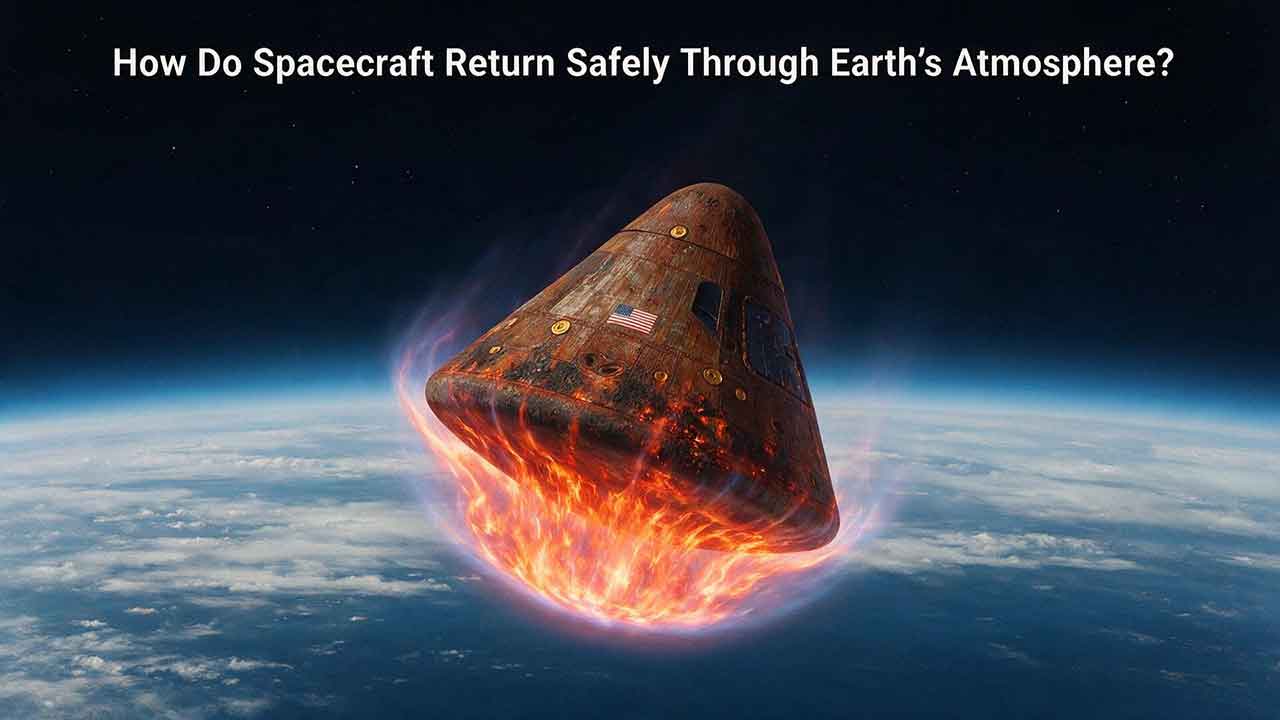
How Do Spacecraft Return Safely Through Earth’s Atmosphere?
Spacecraft return safely through Earth’s atmosphere by managing an enormous amount of energy through a carefully coordinated sequence of trajectory control, thermal protection, aerodynamic deceleration, landing, and recovery. This article explains how deorbit burns and entry corridors guide a spacecraft toward its landing region, why blunt heat shields reduce the danger of hypersonic heating, and how guidance systems control attitude, range, and structural loads. It includes an original comparison of low-Earth-orbit and lunar-return energy, a practical review of ablative and reusable heat-shield technologies, and the CosmoBasics Four-Layer Reentry Framework covering path, protection, control, descent, and recovery. Real-world lessons from Artemis I and the crewed Artemis II mission show why postflight inspection remains essential even after a successful splashdown. Readers will also learn how parachutes, wings, landing rockets, flotation systems, and recovery teams complete the return safely.
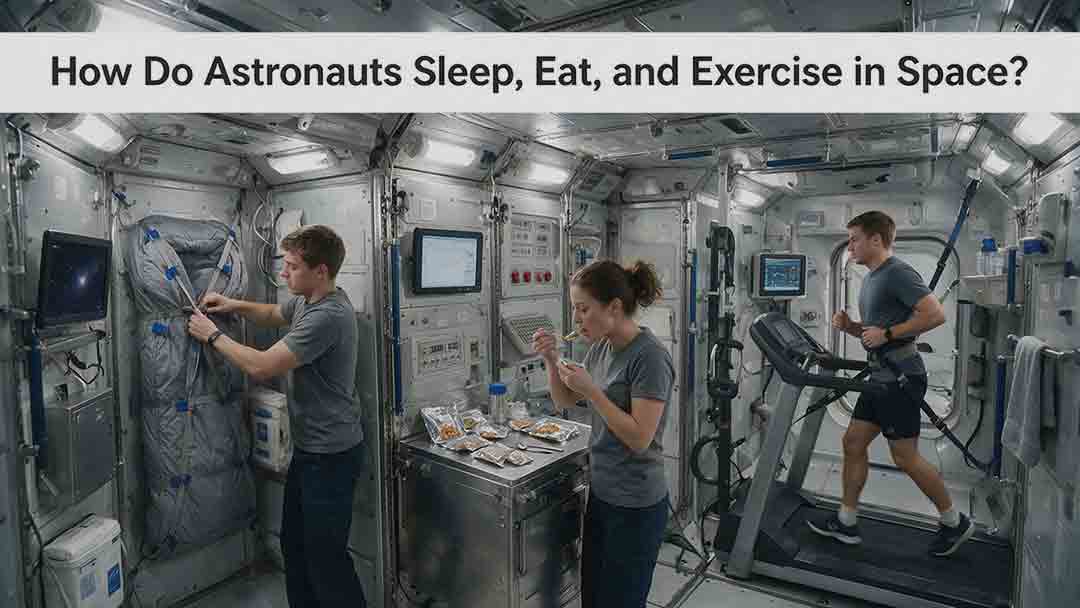
How Do Astronauts Sleep, Eat, and Exercise in Space?
Astronauts must redesign ordinary routines when they live in microgravity. This article explains how crew members sleep in secured bags inside ventilated quarters, prepare packaged meals without letting food or liquids drift through the cabin, and use specialized exercise equipment to protect their physical condition. It examines the roles of the Advanced Resistive Exercise Device, the T2 treadmill, and the CEVIS cycle ergometer, while clarifying the difference between active workout time and the full scheduled exercise period. Readers will also learn why tortillas are practical in space, how airflow affects sleep, why ordinary weights do not work normally in orbit, and how nutrition, rest, and exercise support one another. NASA and ESA sources provide the factual foundation, while original comparison tables and practical evaluation frameworks show how spacecraft systems replace functions normally supplied by gravity. The article also distinguishes current International Space Station practices from possible future Moon and Mars mission requirements.
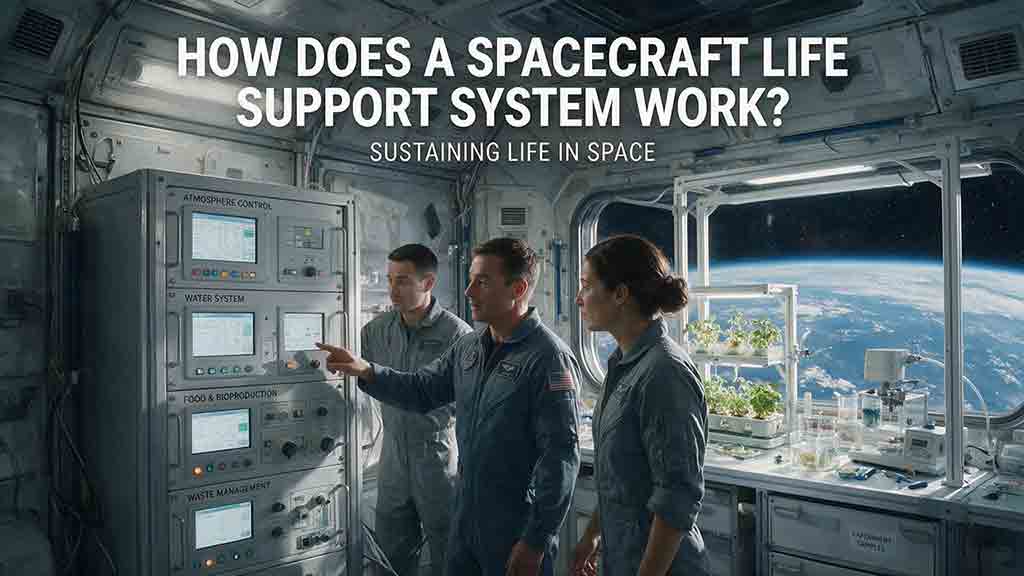
How Does a Spacecraft Life Support System Work?
A spacecraft life support system creates and maintains a safe cabin environment for astronauts by managing oxygen, carbon dioxide, air pressure, ventilation, temperature, humidity, water, waste, and environmental hazards. This article explains how the Environmental Control and Life Support System connects these functions into continuous air, water, heat, and waste-management loops. It compares stored-resource and regenerative designs, examines how the International Space Station and Orion use different life support architectures, and clarifies what NASA’s reported 98% water-recovery milestone actually means. Readers will also find an educational water-use calculation, a high-level architecture checklist, a system-failure comparison table, and the original Four-C framework for evaluating Crew, Calendar, Cargo, and Consequences. The guide relies on NASA and European Space Agency sources while clearly separating official facts, illustrative estimates, and independent editorial analysis.
Explore More Topics
How Are Space Missions Planned From Design to Launch?
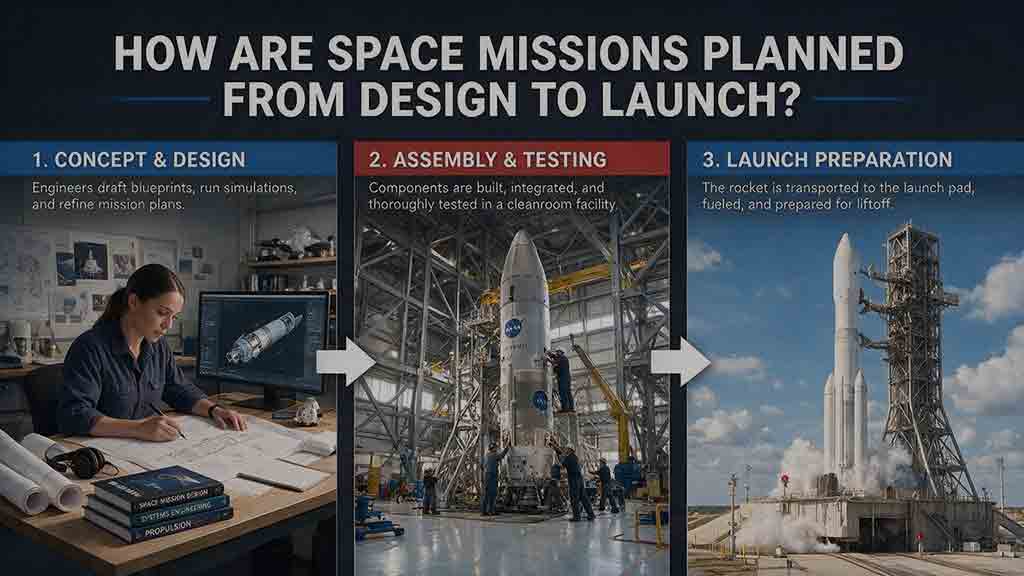
Space missions are planned by transforming a scientific, commercial, or exploration goal into a complete system that can be designed, built, tested, launched, operated, and responsibly concluded. This guide follows the full planning lifecycle, from defining measurable objectives and comparing mission concepts to writing requirements, selecting an architecture, managing resource budgets, and controlling interfaces. It explains how payloads, spacecraft platforms, trajectories, launch services, software, ground systems, regulations, and operations must be developed together. Readers will also learn how design reviews, fabrication, environmental testing, end-to-end verification, operator training, licensing, launch integration, and readiness assessments support mission development. Original planning frameworks, worked mass, power, and data calculations, troubleshooting guidance, and a practical checklist show how teams identify weak assumptions and resolve designs that do not close. The central lesson is that mission readiness depends on the entire technical and operational system—not merely on completing the spacecraft.
What Happens During a Rocket Launch Countdown?
A rocket launch countdown is far more than a clock running toward zero. It is a carefully coordinated process that brings the launch vehicle, spacecraft, ground equipment, flight teams, weather conditions, and safety range into an approved configuration for liftoff. This article explains the major countdown phases, including launch-pad preparation, propellant loading, avionics and navigation checks, weather monitoring, range clearance, go/no-go polls, and terminal count. It also clarifies commonly misunderstood terms such as T-minus, L-minus, planned hold, recycle, scrub, and launch window. An original Four-C Countdown Framework—Clock, Configuration, Constraint, and Commitment—helps readers understand why teams may continue, pause, return to an earlier step, or cancel a launch attempt. Practical timelines, comparison tables, a launch-window calculation, and a viewer’s checklist make the article useful for students, educators, first-time launch viewers, and spaceflight enthusiasts.
How Do Spacecraft Dock in Orbit?
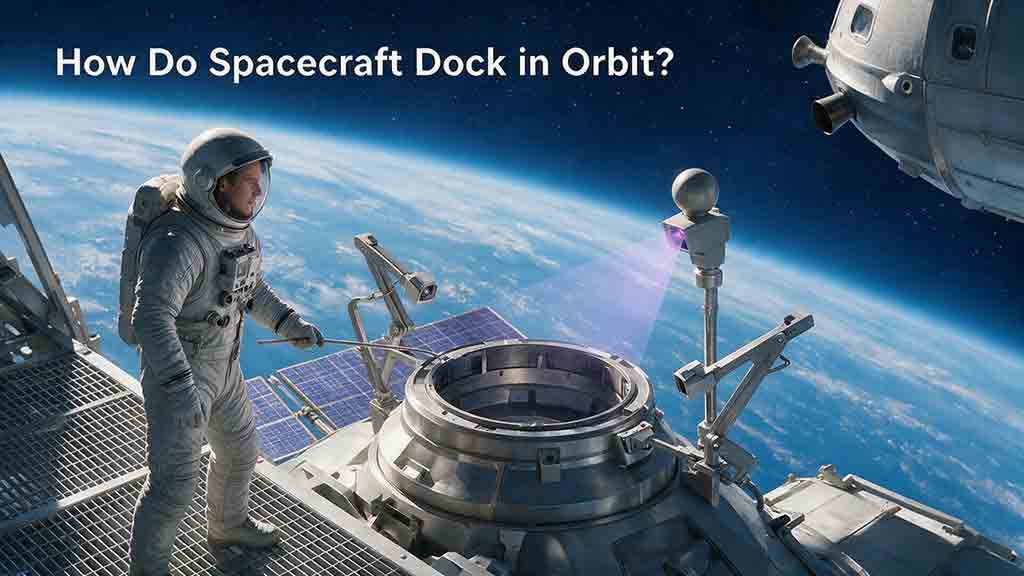
Spacecraft docking is a carefully controlled process that begins long before two vehicles make physical contact. The approaching spacecraft must first establish compatible orbital geometry, adjust its timing through phasing maneuvers, and reduce differences in position, velocity, and orientation. This guide explains the complete sequence from far-field rendezvous and relative navigation to hold points, final approach, soft capture, and hard capture. It also compares docking with robotic berthing, examines the sensors and control systems used during an approach, and shows how mission teams respond when navigation data, closing rates, or alignment fall outside permitted limits. A simplified orbital calculation demonstrates why a spacecraft in a slightly lower orbit can gradually catch its target. Readers will also find an original five-match framework, a practical docking-safety model, real mission examples, and a checklist for evaluating docking plans. The article clearly distinguishes educational principles from vehicle-specific flight procedures and engineering requirements.