Explore the Unknown
Discover the secrets of black holes, galaxies, and the origin of the universe.
Trending Now
Featured Articles
Latest and most popular articles from all categories
Explore by Topic
Journey through different realms of cosmic knowledge
Human Spaceflight
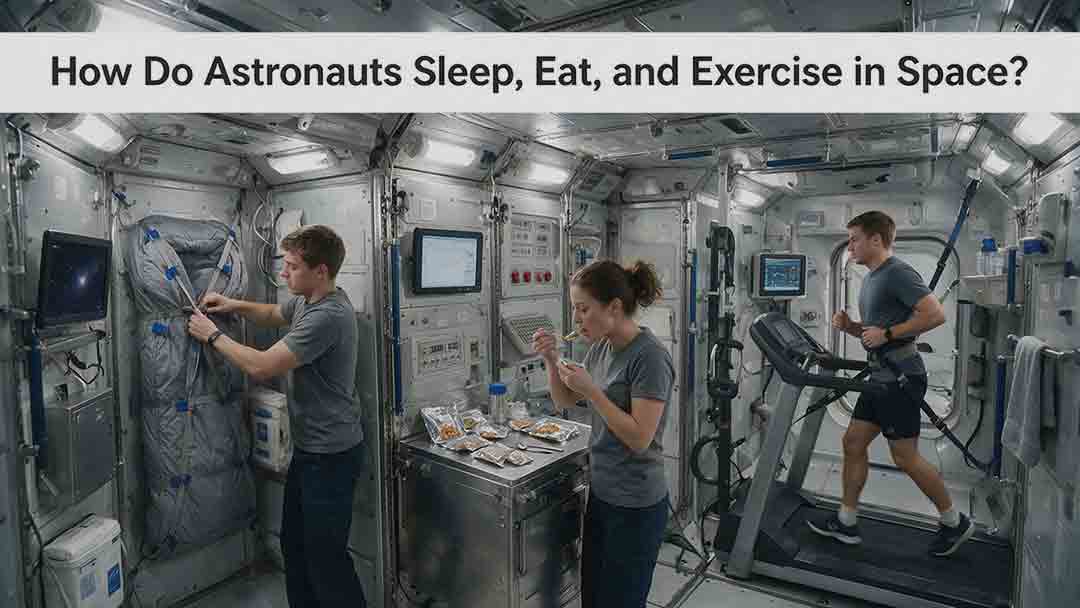
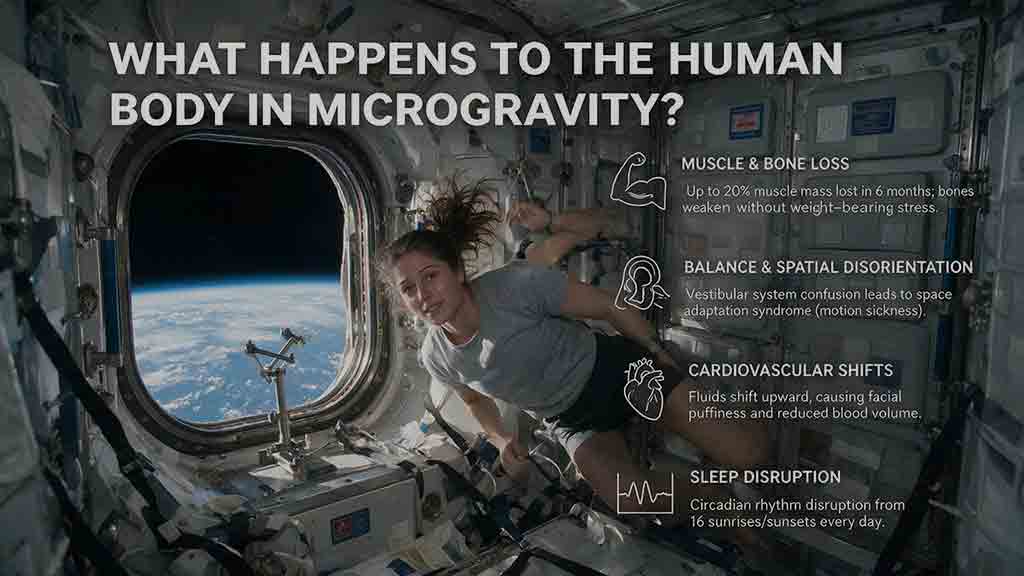
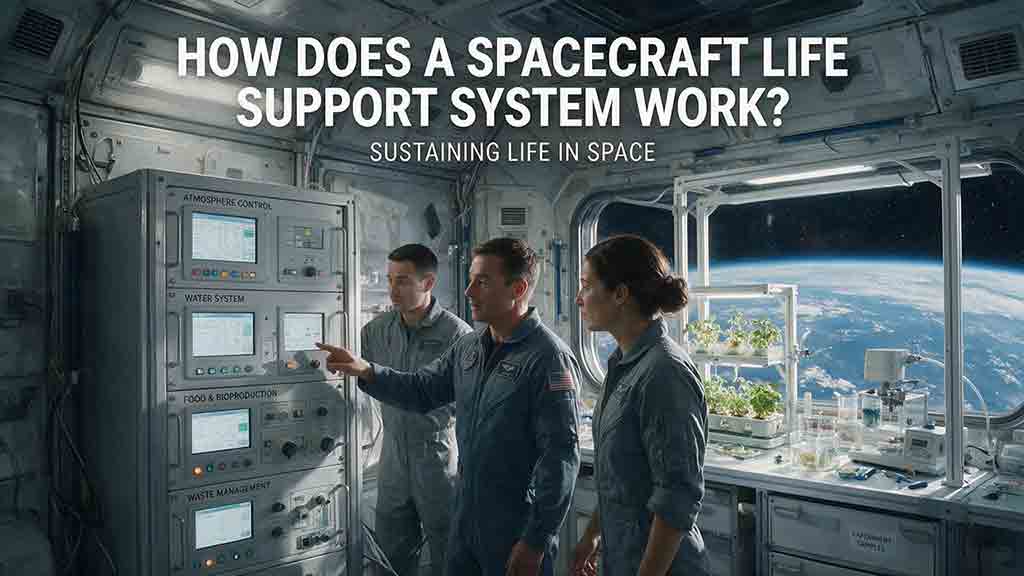
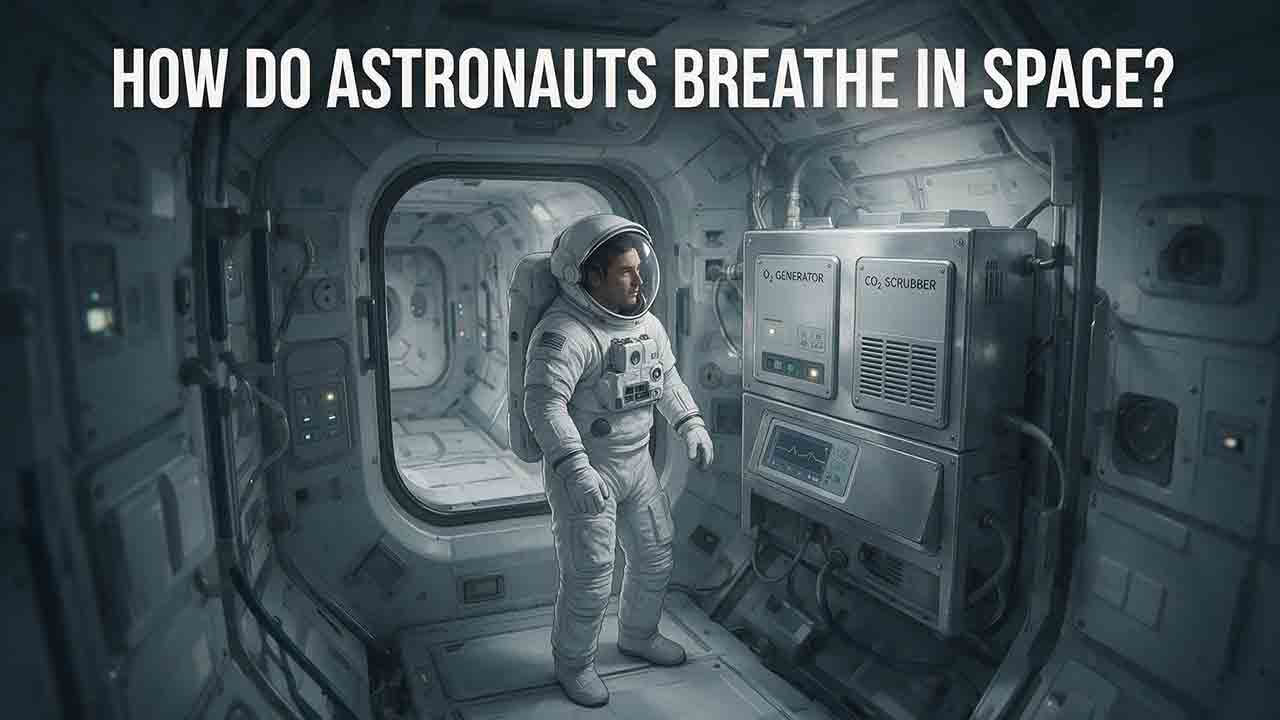
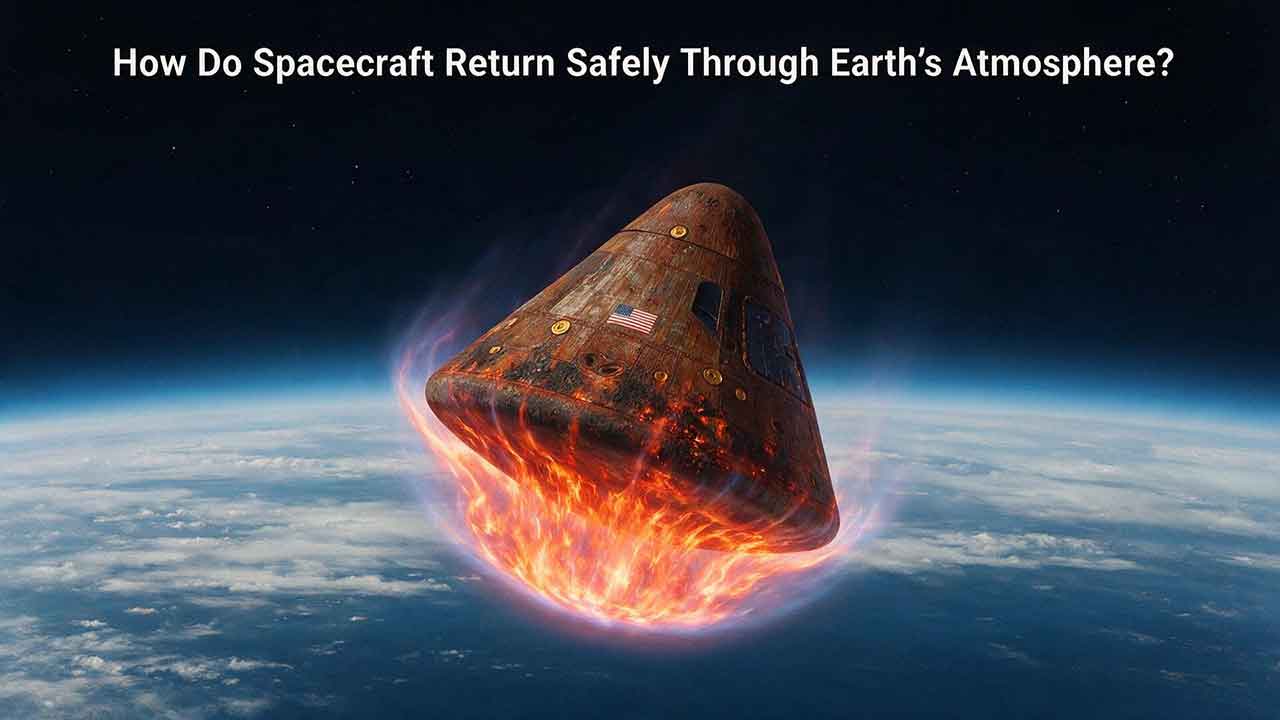
Follow humanity’s journey beyond Earth. Learn about astronaut training, life support systems, and space stations.
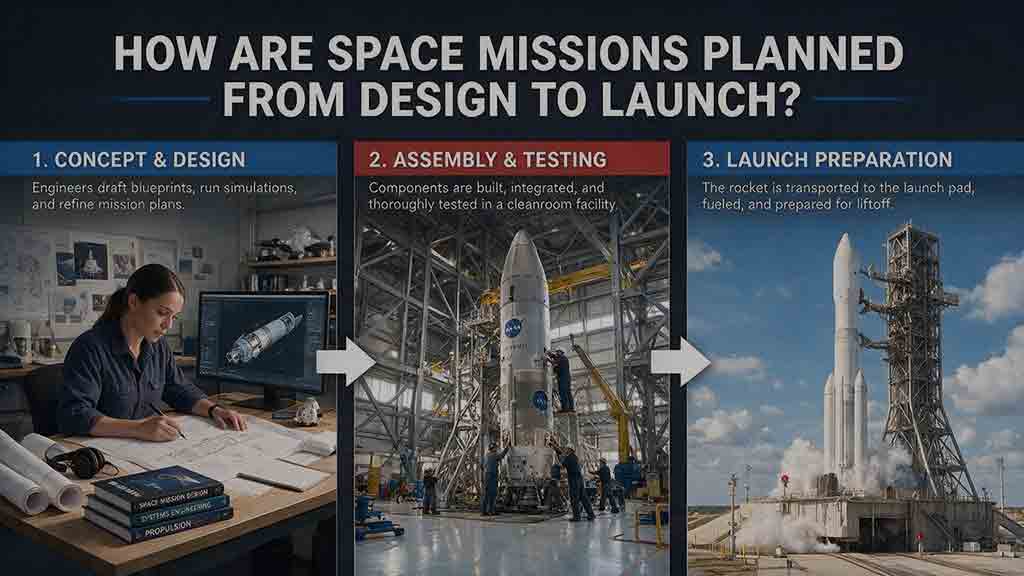
Mission Operations & Exploration
Go behind the scenes of deep space exploration. Discover how mission control navigates robotic probes to other worlds.
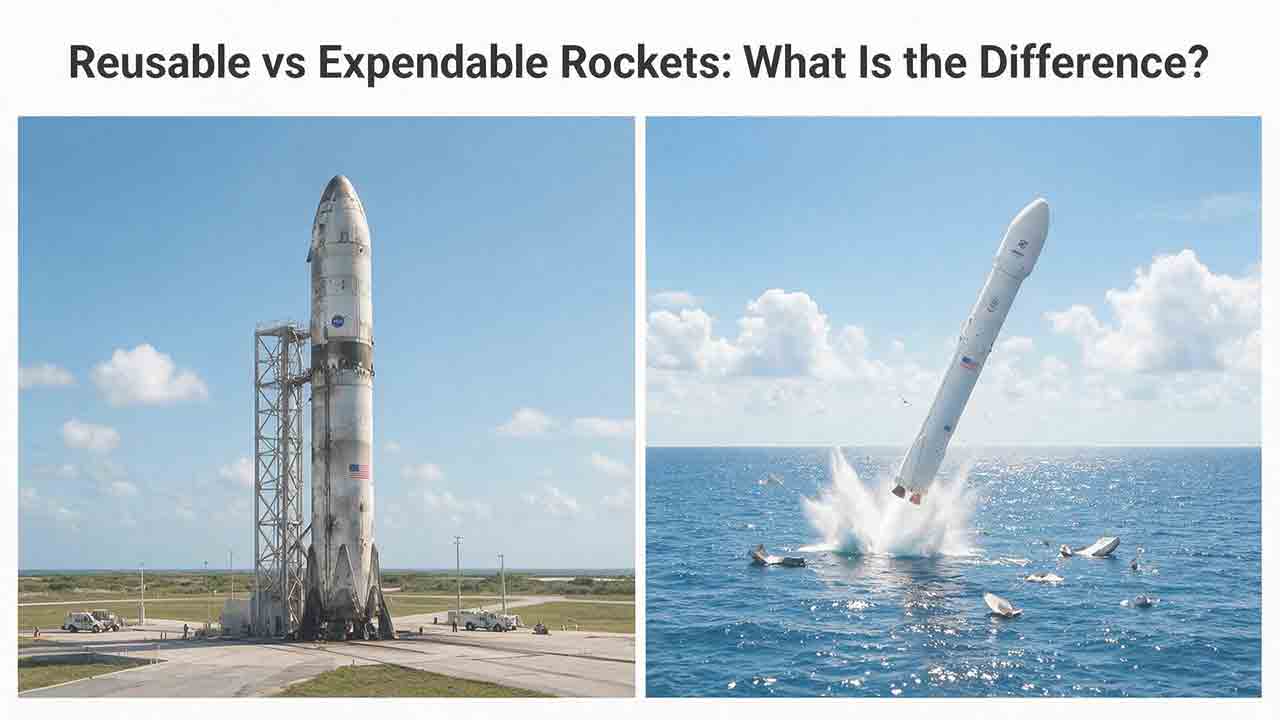
Rockets & Launch Systems
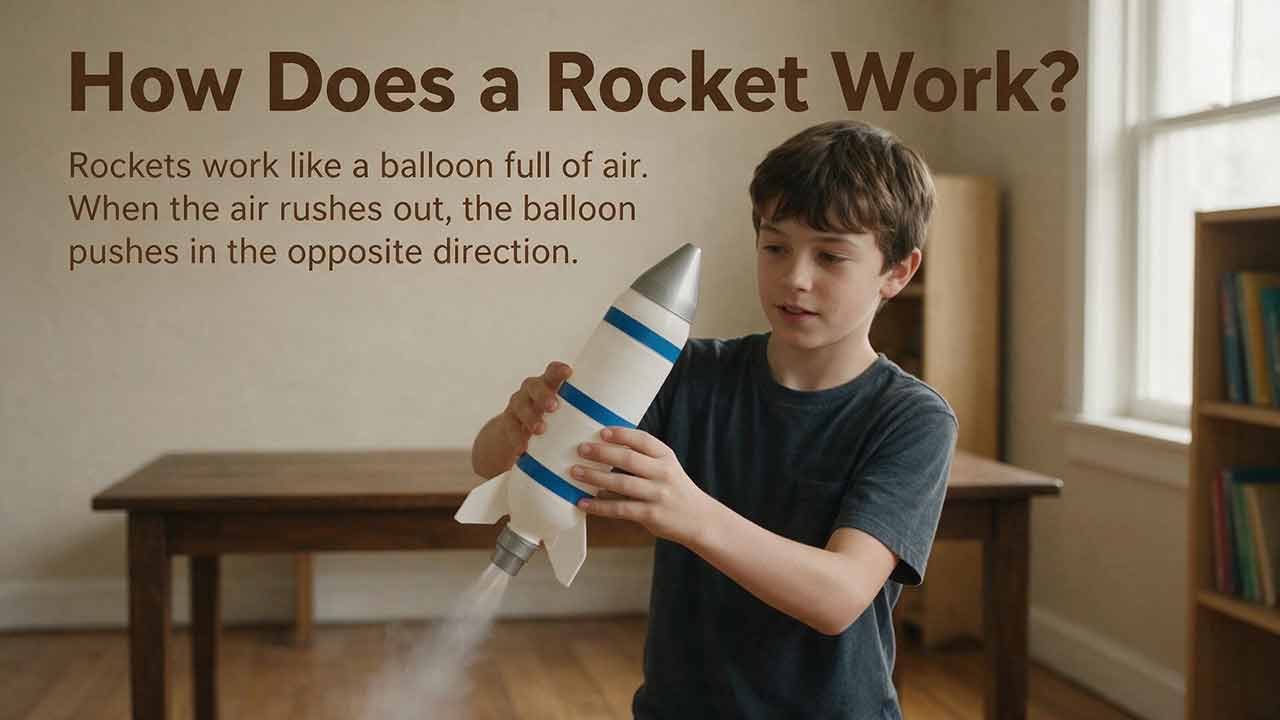
Explore rocket propulsion, booster staging, and launch vehicle engineering. Learn how we escape Earth’s gravity.
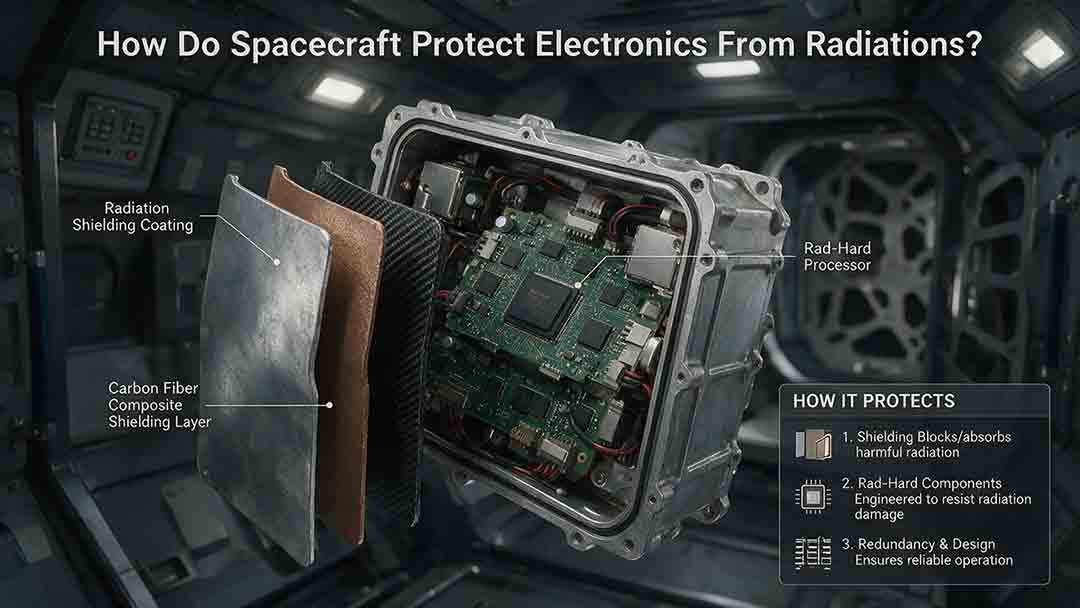
Spacecraft Engineering
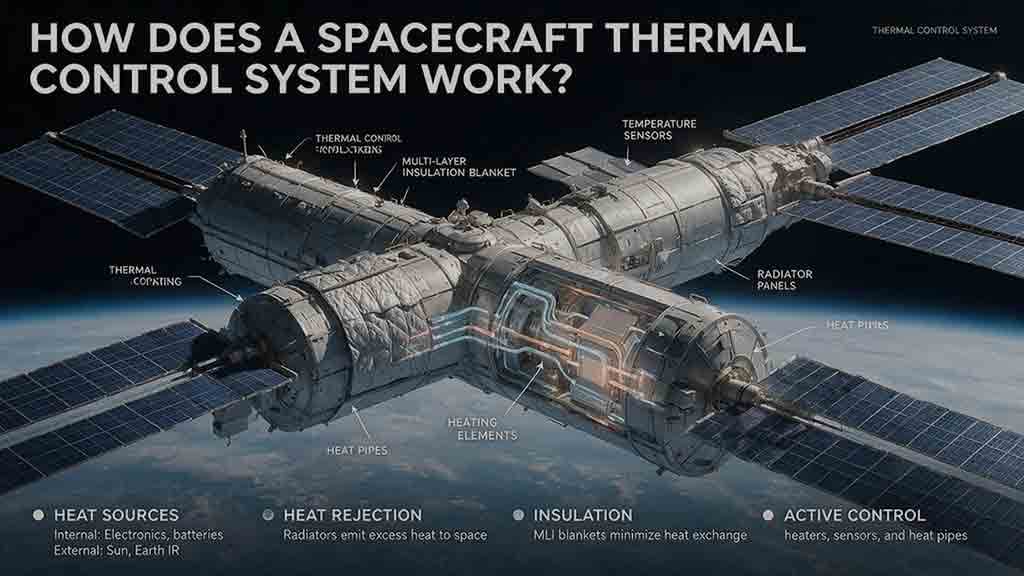
Deconstruct satellite payloads, thermal controls, and power systems. Explore the engineering behind hardware built for space.
Science Deep Dive
High-quality long-form content exploring cosmic phenomena in depth
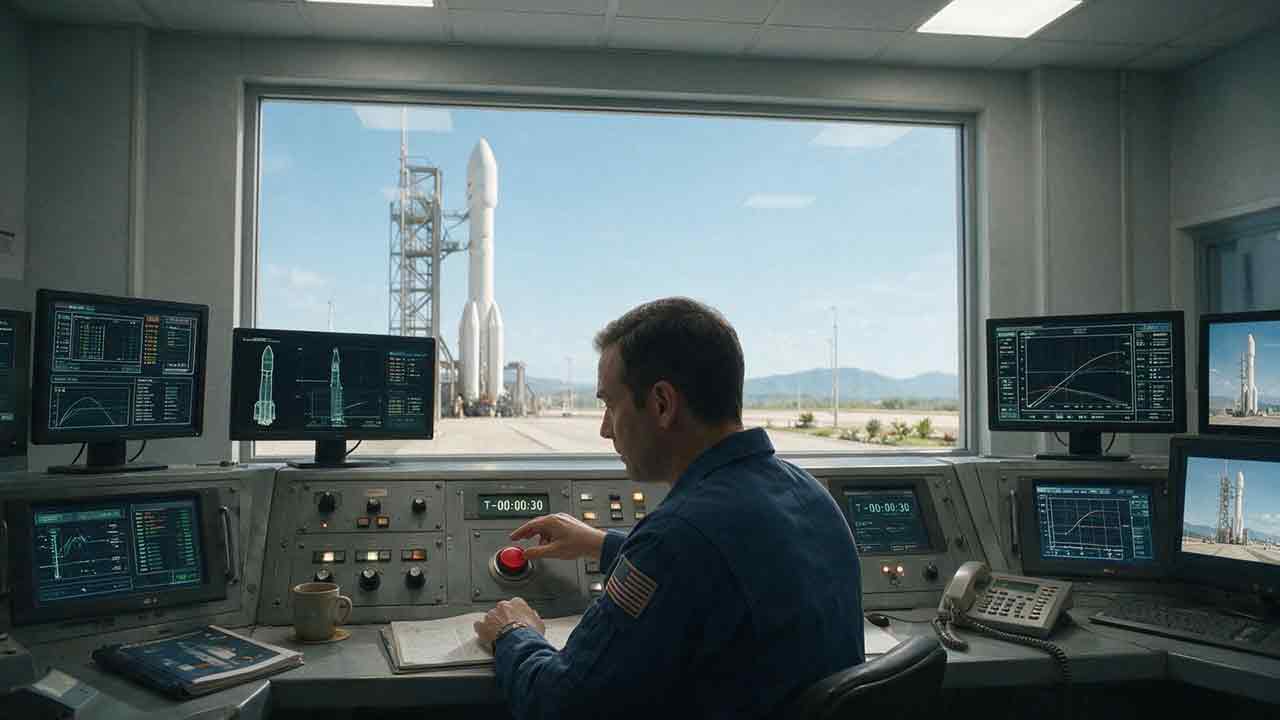
What Happens During a Rocket Launch Countdown?
A rocket launch countdown is far more than a clock running toward zero. It is a carefully coordinated process that brings the launch vehicle, spacecraft, ground equipment, flight teams, weather conditions, and safety range into an approved configuration for liftoff. This article explains the major countdown phases, including launch-pad preparation, propellant loading, avionics and navigation checks, weather monitoring, range clearance, go/no-go polls, and terminal count. It also clarifies commonly misunderstood terms such as T-minus, L-minus, planned hold, recycle, scrub, and launch window. An original Four-C Countdown Framework—Clock, Configuration, Constraint, and Commitment—helps readers understand why teams may continue, pause, return to an earlier step, or cancel a launch attempt. Practical timelines, comparison tables, a launch-window calculation, and a viewer’s checklist make the article useful for students, educators, first-time launch viewers, and spaceflight enthusiasts.
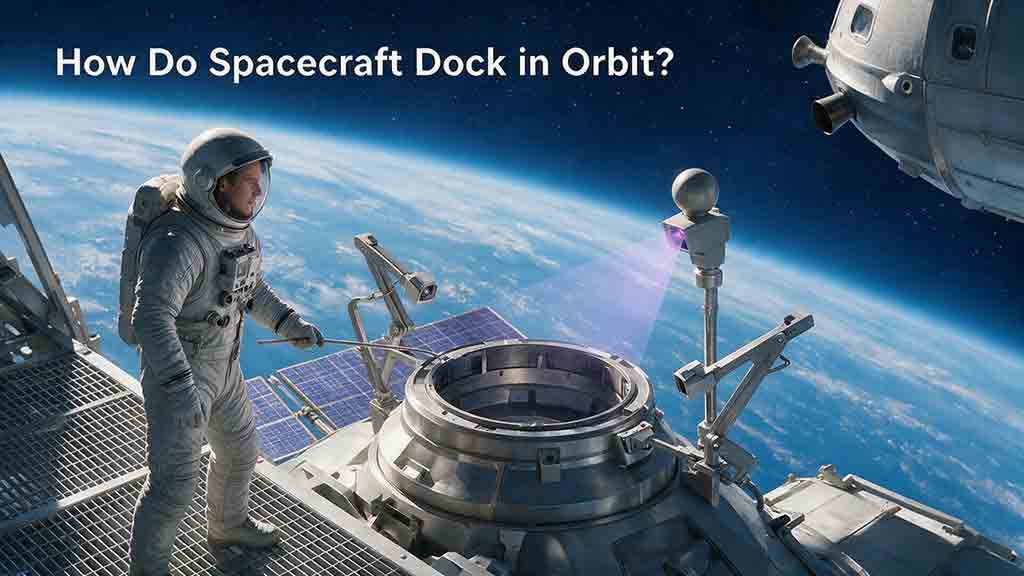
How Do Spacecraft Dock in Orbit?
Spacecraft docking is a carefully controlled process that begins long before two vehicles make physical contact. The approaching spacecraft must first establish compatible orbital geometry, adjust its timing through phasing maneuvers, and reduce differences in position, velocity, and orientation. This guide explains the complete sequence from far-field rendezvous and relative navigation to hold points, final approach, soft capture, and hard capture. It also compares docking with robotic berthing, examines the sensors and control systems used during an approach, and shows how mission teams respond when navigation data, closing rates, or alignment fall outside permitted limits. A simplified orbital calculation demonstrates why a spacecraft in a slightly lower orbit can gradually catch its target. Readers will also find an original five-match framework, a practical docking-safety model, real mission examples, and a checklist for evaluating docking plans. The article clearly distinguishes educational principles from vehicle-specific flight procedures and engineering requirements.
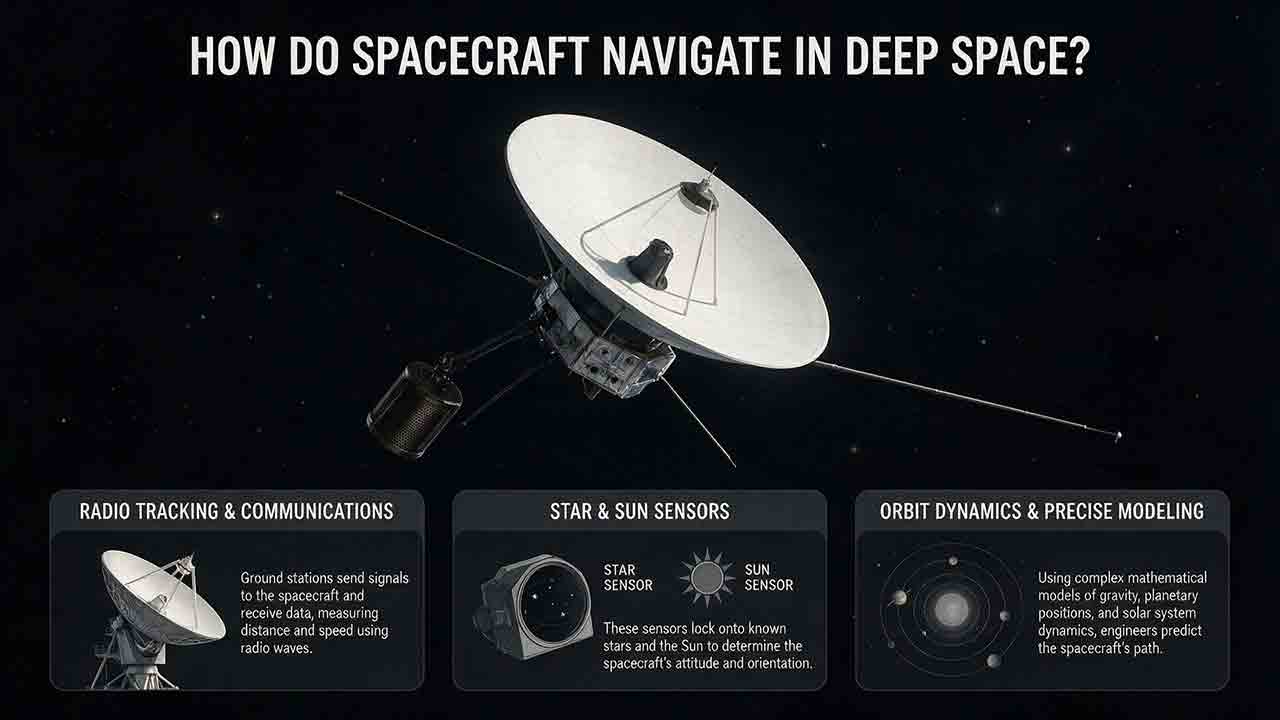
How Do Spacecraft Navigate in Deep Space?
Spacecraft navigate in deep space by comparing a predicted trajectory with repeated radio, optical, and onboard measurements. Ground networks measure distance, line-of-sight velocity, and angular direction. Cameras add destination-relative observations, while attitude sensors establish the spacecraft’s pointing direction. Navigation software combines those observations with force models, estimates position and velocity with uncertainty, and determines whether a trajectory correction is needed.
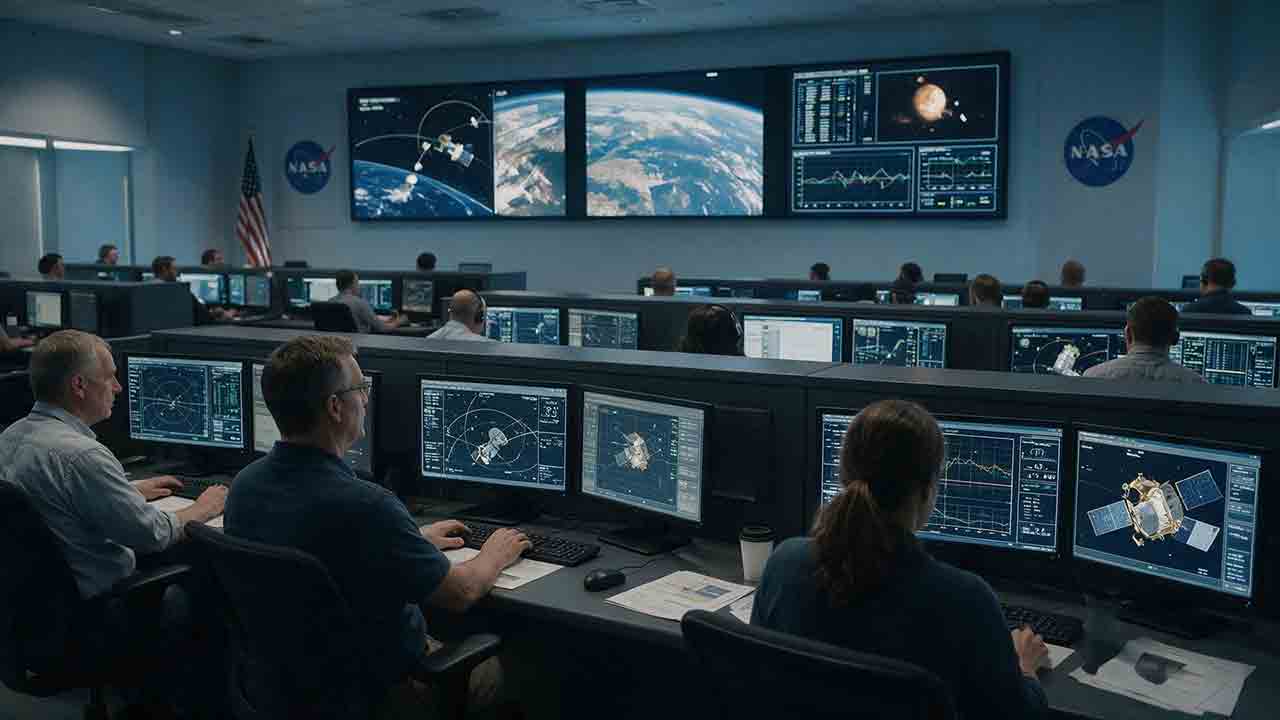
How Does Mission Control Operate a Spacecraft?
Mission control operates a spacecraft through a carefully coordinated cycle of planning, monitoring, commanding, and verification. This article explains how flight directors, spacecraft controllers, navigation teams, engineers, and communication specialists work together to keep a mission safe and productive. It distinguishes telemetry from tracking data, follows a command from preparation to onboard execution, and shows why receiving a command is not the same as confirming its result. A transparent deep-space example demonstrates how communication delay, analysis, authorization, execution, and verification combine into a complete response timeline. The guide also examines spacecraft safe mode, the division of responsibility between Earth and onboard systems, and ESA’s recovery of the Integral observatory. Readers will gain a practical framework for understanding routine spacecraft operations, anomaly response, mission autonomy, and the limits imposed by distance, incomplete data, finite resources, and spacecraft design.
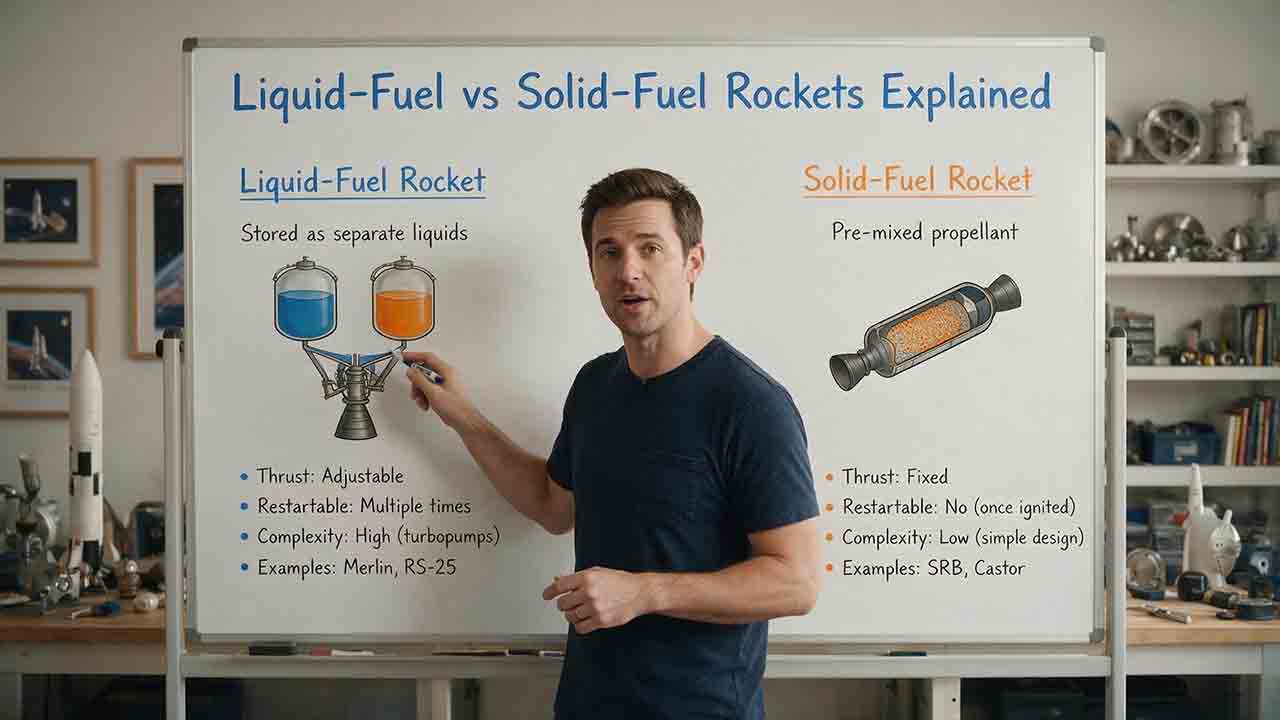
Liquid-Fuel vs Solid-Fuel Rockets Explained
Liquid-fuel and solid-fuel rockets solve different engineering problems. Liquid rocket engines store fuel and oxidizer separately, allowing many systems to regulate thrust, shut down, or restart during flight. Solid rocket motors contain prepared solid propellant and can deliver compact, powerful thrust with fewer active feed-system components, although conventional motors offer limited control after ignition. This article compares both propulsion types across thrust, specific impulse, storage, mechanical complexity, reliability, cost, reusability, and environmental considerations. It also explains why solid motors often serve as launch boosters while liquid engines are widely used for core stages, upper stages, and powered recovery. An original calculation demonstrates how specific impulse affects ideal velocity change, while a five-part mission framework helps readers evaluate propulsion choices based on control, performance, packaging, operations, and lifecycle requirements. Real launch systems, including SLS, Ariane 6, Falcon 9, and Vulcan Centaur, show why no single propulsion type is best for every mission.
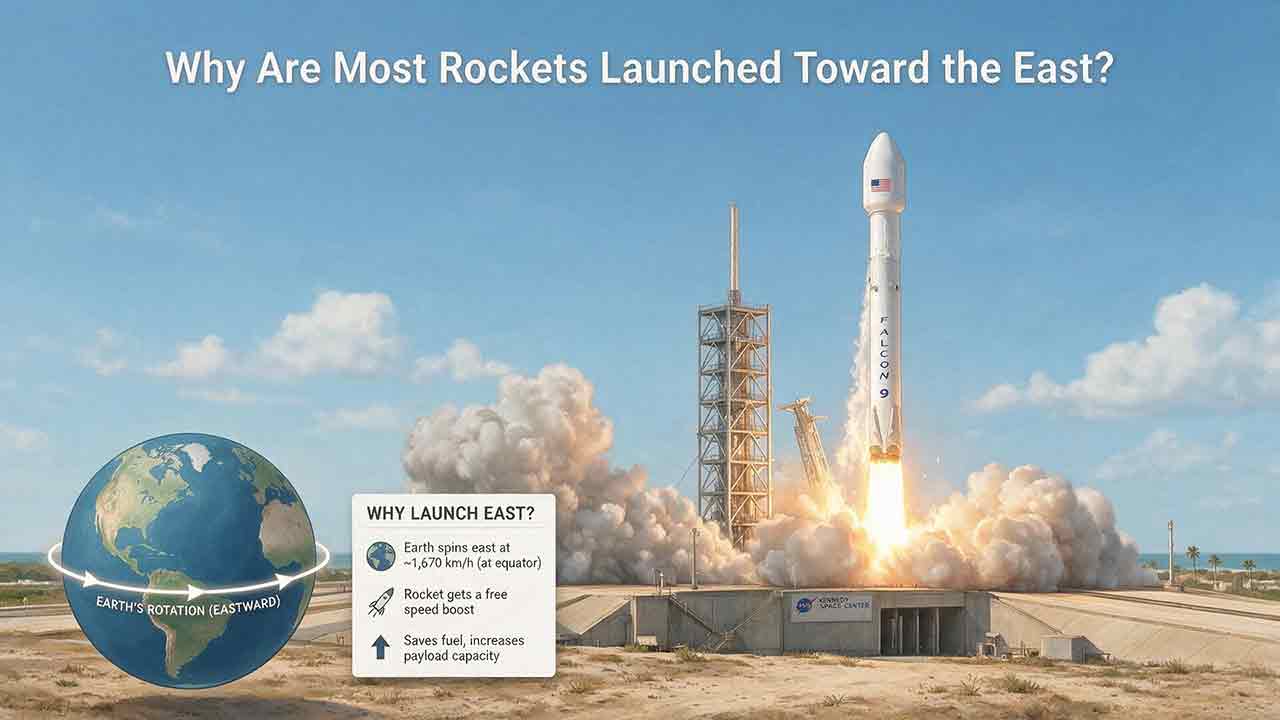
Why Are Most Rockets Launched Toward the East?
Most orbital rockets launch generally toward the east because Earth rotates from west to east, giving launch vehicles useful initial velocity before liftoff. This advantage is strongest near the equator and can reduce the additional speed a rocket must produce for compatible prograde orbits. However, launch direction is not determined by efficiency alone. Target orbital inclination, launch-site latitude, populated areas, stage-impact zones, range-safety rules, and mission objectives may require a rocket to travel northeast, southeast, south, or along a retrograde trajectory. This article explains how Earth’s rotation contributes to launch performance, compares Kourou with Cape Canaveral through a transparent calculation, and shows how latitude and launch azimuth affect the usable speed component. It also introduces the reader-friendly EAST framework for evaluating real missions and explains why polar, Sun-synchronous, and range-constrained launches often do not fly directly east.